



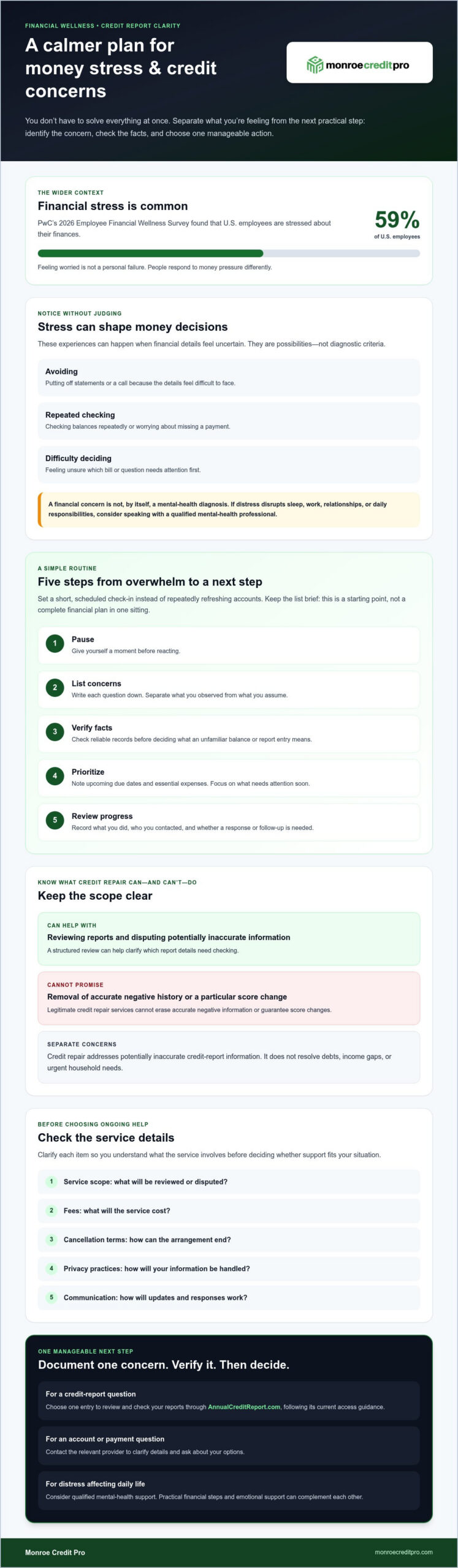
Could a credit report problem feel more manageable if you separated the stress from the next practical step? PwC’s 2026 Employee Financial Wellness Survey found that 59% of U.S. employees are stressed about their finances. If you are looking for reliable credit repair solutions, it can be hard to know what to check first or whether professional help is the right choice.
That uncertainty is understandable. Credit reports can be difficult to review, and financial pressure can make every decision feel urgent. You don’t have to solve everything at once. Start by identifying the concern, checking the information, and choosing one realistic action. Monroe Credit Pro can help address potentially inaccurate report items, but legitimate services cannot remove accurate negative history.
This guide explains how to reduce money-related stress, what credit repair services can and can’t do, and how to assess whether support may fit your situation. You’ll also find steps for building a manageable routine, recognizing consumer protections, and knowing when to seek qualified financial or mental-health support. A calmer plan begins with one manageable step.
Key Takeaways
- Recognize how financial anxiety can affect everyday money decisions without treating those reactions as personal failures.
- Use a simple routine to pause, list concerns, verify facts, prioritize, and review progress instead of repeatedly checking accounts.
- Credit repair services can help review reports and dispute potentially inaccurate information, but can’t erase accurate negative history or guarantee score changes.
- Before choosing ongoing credit repair help, clarify the service scope, fees, cancellation terms, privacy practices, and communication process.
- Choose one concern to document and verify, then review your credit reports through AnnualCreditReport.com using its current access guidance.
How Financial Anxiety Can Affect Your Money Decisions
Money concerns can feel heavy, especially when bills compete for attention or a credit report contains information you don’t recognize. Feeling worried isn’t a personal failure. Stress responses vary, and noticing them can help you choose a manageable next step without judging yourself.
For some people, stress leads to avoiding account statements or postponing a call because the details feel difficult to face. Others check balances repeatedly, worry about missing a payment, or struggle to decide which bill needs attention first. These are possibilities, not diagnostic criteria. They don’t establish a mental-health condition, and experiences differ from person to person.
What can money-related anxiety feel like?
You might find yourself thinking, “What if I’ve missed something?” or “I don’t know where to start.” Uncertainty about an upcoming bill, an unclear balance, or an unfamiliar credit report entry can keep those thoughts active. A structured review of credit information can clarify what needs checking, but it’s only one part of addressing financial stress.
Financial problem-solving focuses on practical questions, such as what a balance represents or which payment is due next. Emotional support focuses on how worry is affecting you and how to cope with it. The two can complement each other. If distress is disrupting sleep, work, relationships, or daily responsibilities, consider speaking with a qualified mental-health professional.
Why does uncertainty make financial stress harder?
Unclear information leaves room for worry to fill in the gaps. You may be unsure whether a balance is current, whether a report entry belongs to you, or which expense to handle first. If you’re also trying to understand understanding your credit score, unfamiliar terms can add another layer of confusion. You don’t need to resolve every question at once.
Write each concern in a short list, separating observations from assumptions. For example, note “I don’t recognize this account” rather than concluding that your identity has been misused. Then verify the entry using reliable records and decide what action, if any, is appropriate. A written list turns a swirl of concerns into questions you can examine one at a time.
A financial concern may call for a practical next step, but it isn’t by itself a mental-health diagnosis. If you’re considering credit repair services, treat that as a separate, specific task: identify the credit-report issue first, then determine whether it needs review. Keeping emotional support and financial problem-solving distinct can make both easier to approach.
How to Create a Calm, Step-by-Step Plan for Financial Stress
A clear process can make financial concerns easier to sort, even when it can’t resolve every problem at once. Set aside a short, scheduled check-in rather than refreshing accounts throughout the day. Then move through five steps: pause, list concerns, verify facts, prioritize, and review progress.
Pause before reacting, write down each concern, verify what you know, prioritize the next practical action, and review what changed. Keep the list brief. You’re creating an organized starting point, not a complete financial plan in one sitting.
Which money concern should you address first?
List upcoming due dates, essential expenses, and questions that need verification. Mark what needs attention soon, then separate those items from longer-term goals, such as reviewing credit information. This can help you focus without assuming every concern has the same urgency.
If you have a question about an account or expect difficulty making a payment, contact the relevant provider to clarify the details and ask about your options. Credit repair addresses potentially inaccurate information in credit reports; it doesn’t resolve debts, income gaps, or urgent household needs. For general guidance on reviewing credit and disputing errors, the Federal Trade Commission explains how to fix your credit.
How can a manageable review routine reduce overwhelm?
Choose a regular time for a brief money check-in and focus on one topic at a time. For example, use one session to check due dates and another to review a credit-report question. A written checklist can keep the task contained:
- What needs attention?
- What information should I verify?
- What action did I take, and who did I contact?
- Did I receive a response, and is there a follow-up date?
Record responses and follow-up dates so you don’t have to keep the details in mind or repeatedly reopen the same account. If a credit-report concern remains unclear after you review the information, a credit report audit or credit counseling may help you understand what questions to ask. Before choosing ongoing support, confirm what it covers and how communication will work.
A routine can support organization, but it won’t guarantee that anxiety will ease. Adjust the process if it becomes another source of pressure, and consider qualified support when stress interferes with daily life. The goal is steady progress: identify one concern, take one appropriate step, and leave the rest for your next planned review.
How Credit Reports and Credit Repair Services Fit Into the Picture
A credit report is a record of credit-related information, while a credit score is calculated using information in a report. The Consumer Financial Protection Bureau explains what a credit score is and why it may matter in financial decisions. Equifax, Experian, and TransUnion are separate nationwide credit reporting companies. Their reports may contain different information, so reviewing one doesn’t necessarily show what appears on the others.
Credit repair services generally involve reviewing credit reports and helping dispute information that may be inaccurate or incomplete. A dispute asks the relevant company or information provider to investigate a specific item. It isn’t a way to erase accurate, current negative information, and no service can guarantee a deletion, score increase, or specific timeline.
What can a credit repair service actually review?
A review may flag entries that appear inconsistent, unfamiliar, or worth investigating, such as a possible reporting error or an account detail that doesn’t match your records. You can obtain your reports, review them, and dispute information you believe is inaccurate yourself. Professional support is optional, not a required purchase. Some providers review reports from all three bureaus, so ask exactly what a review includes before agreeing.
The Fair Credit Reporting Act (FCRA) concerns the accuracy and handling of credit reporting information, while the Credit Repair Organizations Act (CROA) addresses credit repair organizations. These laws provide a consumer-protection framework, but they don’t mean every company or claim is trustworthy. Confirm current requirements and contract terms before choosing a service.
What can credit repair services not promise?
Accurate, current negative information can’t simply be removed because it’s unfavorable. A legitimate dispute should focus on a specific item with a reason to question its accuracy or completeness. The outcome depends on the investigation, and score changes aren’t guaranteed. Be cautious of claims promising certain deletions, score results, or a fixed completion date.
Use this comparison to decide what kind of help fits your question. Each option serves a different role:
| Option | What it can help with |
|---|---|
| Self-review | Checking reports and disputing information you believe is inaccurate. |
| Professional dispute support | Organizing report review and assistance with disputes about potentially inaccurate items. |
| Credit counseling | Understanding credit information and considering practical steps toward longer-term credit goals. |
Choose based on the task you need help with. Report review and dispute support address credit-file questions; they don’t resolve every financial concern or guarantee a particular score outcome.
How to Evaluate Credit Repair Help Without Adding More Stress
Choosing professional support should bring clarity, not urgency. Compare the service’s stated scope with the problem you want addressed, and read the terms before sharing information or agreeing to recurring charges. Credit repair services focus on reviewing credit reports and supporting disputes about potentially inaccurate information. Credit counseling can help you understand credit and consider rebuilding steps, while credit monitoring tracks changes to credit information.
Credit repair services also aren’t lending or debt-settlement services. If you need help with a loan, a debt, or an immediate financial shortfall, clarify what kind of provider addresses that need rather than assuming credit repair covers it.
What questions should you ask before enrolling?
Ask the provider to explain which report items may warrant review and why. Request clear written details before agreeing, including what services are included, how fees and recurring billing work, how to cancel, what information will be collected or shared, and what responsibilities remain yours. Make sure you understand how you’ll receive updates and whether you need to gather documents or respond to correspondence.
- Scope: Which reports and items will be reviewed, and what work is included?
- Costs and billing: What charges apply, how often might you be billed, and when do charges begin?
- Cancellation: What steps and terms apply if you decide to stop?
- Privacy and communication: How is your information handled, and how will progress or requests be shared?
Pause if a representative pressures you to decide immediately or promises guaranteed deletions, score increases, or a specific result by a set date. Those claims are reasons to verify, not assurances to rely on. Check current consumer-protection guidance from the Consumer Financial Protection Bureau and Federal Trade Commission, and compare it with the provider’s written agreement.
When may professional support be useful?
Support may be worth considering if reviewing reports from multiple bureaus, identifying possible inaccuracies, or tracking dispute correspondence feels difficult to manage. Ask what the provider will do and what remains your responsibility. You can also review reports and submit disputes yourself; professional help isn’t necessary for everyone or every credit concern.
Choose the approach that fits the task and your comfort level. If you’re looking for a structured review, you can review credit report audit options and consider whether the scope and terms match your needs.
Choose Your Next Step for Financial Stress and Credit Concerns
You don’t need to resolve every concern today. Choose one small task, record what you know, and identify how to verify what’s unclear. For example, review one unfamiliar report entry or organize upcoming due dates. A short note with your question, next action, and follow-up date can keep details from becoming another thing to hold in memory.
What can you do today to regain a sense of control?
If you’re checking a credit report, use AnnualCreditReport.com, the official site for requesting reports, and follow its current instructions for access. Review one section at a time. If you’re organizing bills, write down due dates and note which account provider to contact with questions. Keep the task specific enough to finish in one sitting.
Steady progress doesn’t require solving every concern at once. If financial distress is persistent or disrupting daily life, consider speaking with a qualified mental-health professional. For urgent financial hardship, contact the relevant provider or seek qualified financial guidance about your options. Credit report support may address report-related questions, but it isn’t a substitute for help with immediate needs.
How can a credit profile review support an informed decision?
An individualized review can help clarify what appears on your reports, which items may need further investigation, and what reasonable next steps to consider. A credit report audit may include a review of information across the three major credit bureaus. Credit counseling or rebuilding coaching can offer guidance for understanding credit and considering longer-term steps. These services don’t guarantee that disputed information will be changed or that your score will increase.
Professional support is an option, not a requirement. You can review your reports and dispute information you believe is inaccurate yourself. If you’d like help understanding your report concerns and available support, request a credit profile review. Before proceeding, review the service scope and terms so you can decide whether it fits your needs.
Take One Steady Step Toward Greater Clarity
Financial stress can make every concern feel urgent, but a clear process helps you focus on what you can verify and address next. Write down one question, review reliable information, and decide whether you want to handle it yourself or seek support. Professional credit repair can help with report review and disputes involving potentially inaccurate information, but it can’t remove accurate negative history or guarantee a score change.
If reviewing multiple credit reports or following dispute correspondence feels difficult, professional support may help organize the process. A credit profile review can provide a personalized look at reports from three bureaus. Ongoing monthly dispute cycles, bureau correspondence, and progress tracking can help keep eligible report concerns organized. Before choosing this kind of support, review the service scope and terms so you know what to expect.
If structured review fits your needs, request a credit profile review. You don’t have to solve everything today. One informed step is a meaningful place to begin.
Frequently Asked Questions
Can credit repair services help with financial anxiety?
Credit repair services may reduce uncertainty about credit reports, but they don’t treat anxiety or resolve every financial concern. A provider may review report information and help dispute items that appear inaccurate, giving you a clearer view of one part of your finances. If money worries are disrupting sleep, work, or daily life, consider speaking with a qualified mental-health professional as well as addressing practical financial questions.
Can credit repair companies remove accurate information from a credit report?
No. Accurate, current negative information can’t simply be removed because it lowers your score or feels unfair. Disputes are intended for information you believe is inaccurate or incomplete, such as an account that isn’t yours or a balance that appears incorrect. A credit repair company can’t guarantee deletions or a score increase. Check the entry against your records and dispute it only if you have a valid reason to question it.
How do I dispute an error on my credit report?
Start by obtaining your reports through AnnualCreditReport.com and identifying the specific entry you believe is wrong. Gather relevant records, such as statements or payment confirmations, then follow the credit reporting company’s instructions to submit a dispute. You may also contact the business that provided the information. Keep copies of your dispute and supporting documents, and note when you submitted them so you can track any response or follow-up.
Is professional credit repair worth considering?
It may be worth considering if reviewing reports from multiple bureaus, identifying possible inaccuracies, or tracking dispute correspondence feels difficult to manage. Before enrolling, ask what the provider will review, what dispute support includes, how recurring billing works, and how to cancel. Compare those terms with what you can do yourself. Treat claims about guaranteed deletions, score increases, or specific timelines as reasons to pause and verify.
Can I fix my credit without hiring a credit repair company?
Yes. You can obtain and review your credit reports, dispute information you believe is inaccurate, and keep records of your communications without hiring a company. Focus on one item at a time and follow the instructions provided by the credit reporting company or information provider. Professional assistance is optional. If you prefer support, compare the service scope and terms first, and avoid any provider promising guaranteed removals or a specific score outcome.
What should I do if credit worries are affecting my sleep or daily life?
If credit worries are interfering with sleep or daily responsibilities, consider contacting a qualified mental-health professional. You can also make the financial task more manageable by writing down one concern, identifying how to verify it, and choosing a time to follow up. If an immediate bill or account issue needs attention, contact the relevant provider directly. Credit report support may help clarify report questions, but it isn’t mental-health care.
Are credit repair services the same as debt settlement or credit counseling?
No. Credit repair generally focuses on reviewing credit reports and disputing potentially inaccurate information. Credit counseling is distinct and can help people understand credit and consider rebuilding steps. Debt settlement is a separate service and isn’t the same as disputing a report entry. Before engaging any provider, confirm exactly what it offers and what it doesn’t. A service addressing report accuracy won’t automatically resolve debts or other financial needs.