



A credit report mistake can be addressed methodically. Credit report error correction starts with identifying the inaccurate entry, gathering records that support your position, and sending a clear dispute to the company that reported it. Keep copies of what you submit so you can track the issue through the review process.
It’s understandable to feel uncertain when an error appears on a report that may affect your financial decisions. A careful, organized dispute gives you a practical way to explain what’s wrong and provide relevant information. This guide walks through how to review an entry, prepare your dispute, and follow up on the response, so you can take the next step with greater confidence.
Key Takeaways
- Pinpoint the inaccurate entry and gather records that clearly support your dispute.
- Send a focused correction request to the company that reported the information, and keep copies of your submission.
- Track the response and review the updated report to see whether the disputed information was addressed.
- Consider professional credit correction support when you want help organizing a report review and dispute process.
Credit report error correction
A careful credit report error correction process begins with identifying the exact entry and where the information appears. Reports from Experian, Equifax, and TransUnion can differ, so review each one separately. Look for incorrect personal details, unfamiliar accounts, duplicate debts, inaccurate balances, and payment records that conflict with your own records. Pinpointing an entry gives you a clearer basis for a dispute than a general concern about your report.
Separate possible errors from information you simply dislike seeing. A missed payment that accurately reflects your account history is different from a payment marked late despite records showing it was made on time. Likewise, an unfamiliar account may reflect a reporting mistake, a family member’s account, or possible identity misuse. Treat each item individually. Combining unrelated concerns into one broad request can make it harder to explain what needs correction.
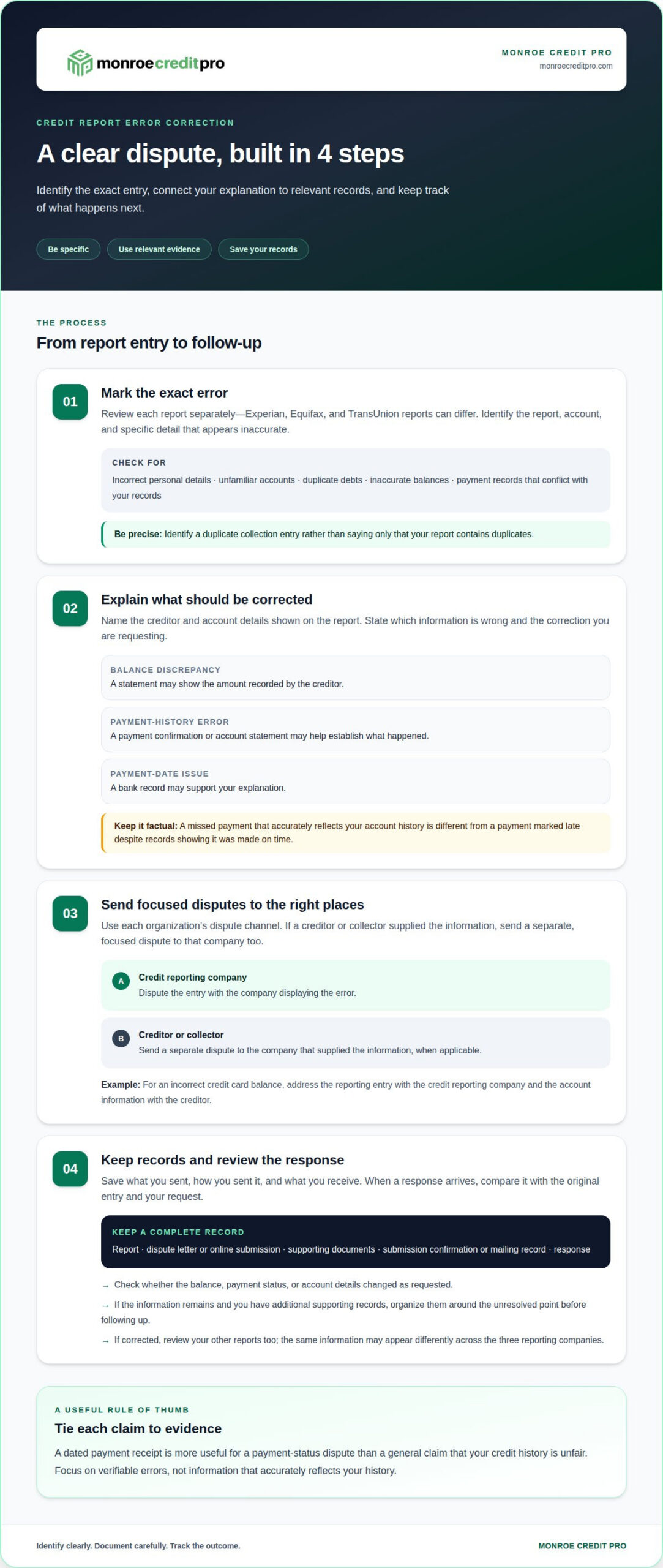
Before disputing an item, identify it by the creditor name and account details shown on the report, then specify which information is wrong. Gather documents that support your explanation. For a balance discrepancy, a statement may show the amount recorded by the creditor. For a payment-history error, a payment confirmation or account statement may help establish what happened. Keep the originals and send copies with your dispute.
- Mark the exact error. Note the report, account, and incorrect detail. For example, identify a duplicate collection entry rather than writing only that your report contains duplicates.
- State the correction you’re requesting. Explain whether the account belongs to you, the balance is inaccurate, or a payment status conflicts with your records.
- Attach relevant evidence. Use documents that directly relate to the disputed detail. A bank record may support a payment-date issue, while an account statement may address a balance.
- Keep a complete record. Save the report, dispute letter or online submission, supporting documents, and any response. These records help you track what was challenged and what was resolved.
Send your dispute to the credit reporting company displaying the error. If a creditor or collector supplied the information, send a separate, focused dispute to that company too. For example, if a credit card balance is incorrect, address the reporting entry with the credit reporting company and the account information with the creditor. Use each organization’s dispute channel, and keep the submission confirmation or mailing record.
Be precise and factual. “This account is wrong” gives little direction; “I paid this account, but the report shows an unpaid balance” identifies the issue. Avoid unrelated records and claims your documents cannot support. If you don’t recognize an account, say so clearly and describe relevant facts, such as never opening an account with that creditor. A concise explanation connects your evidence to the correction you’re requesting.
When a response arrives, compare it with the original entry and your request. Check whether the disputed balance, payment status, or account details changed as requested. If the information remains and you have additional supporting records, organize them around the unresolved point before following up. If the entry is corrected, review your other reports too, since the same information may appear differently across Experian, Equifax, and TransUnion.
Not every unfavorable item is inaccurate, so disputes should focus on verifiable errors. Credit report error correction works best as an organized process: identify the entry, explain the discrepancy, provide relevant records, and track the outcome. A dated payment receipt, for example, is more useful for a payment-status dispute than a general claim that your credit history is unfair. Tie each claim to evidence to make the issue clearer.
Monroe Credit Pro: Credit Restoration
Monroe Credit Pro offers Credit Restoration for people seeking structured support with credit concerns, including inaccurate report information. If you’re managing several disputed entries or need help organizing your next steps, Professional Credit Repair and Credit Correction provide focused assistance. Credit Counseling can also help you understand your credit situation and consider practical ways forward.
Bring the report entries and supporting records you’ve gathered to your discussion with Monroe Credit Pro. This context helps clarify which items may involve reporting errors and what support could fit your needs. Credit Restoration can help when you want guidance beyond handling disputes on your own; Credit Counseling offers broader direction on your credit situation.
Contact Monroe Credit Pro to discuss your credit concerns and the support you’re looking for.
Take the Next Step Toward Clearer Credit
Addressing a reporting error can be one part of strengthening your financial position, especially when preparing to secure a mortgage. If you are navigating unique borrowing challenges or investment properties, brokers like LoansByJB (The Nuhome Team) can assist with complex loan scenarios. Decide whether you’re comfortable managing the process independently or would benefit from structured support. A focused review can help you understand the issues on your report and identify a practical path forward.
Credit report error correction is about seeking accurate information, not changing details that correctly reflect your history. For professional guidance, Monroe Credit Pro offers Credit Restoration, Professional Credit Repair, and Credit Correction. Contact Monroe Credit Pro to discuss your situation and choose a next step with greater clarity.
Contact Monroe Credit Pro to discuss the support you’re seeking. A clear plan can make the work ahead feel more manageable.