



A charge-off can remain on your U.S. credit report for up to seven years from the date of first delinquency, according to the Federal Trade Commission. Paying the account does not restart that period. If the entry contains inaccurate information, you can dispute it with the credit bureau reporting it and explain what is wrong.
A charge-off can feel like a lasting mark, but an incorrect balance, payment status, or date is worth addressing. This guide explains how to dispute inaccurate charge-offs, what to include in your dispute, and what to expect during the investigation. You’ll also learn how long the entry may remain on your report and how to tell a reporting error from information that simply differs between bureaus. Take the process one step at a time, using the facts and documents that support your position.
Key Takeaways
- Review each bureau’s report separately, since their records may differ.
- Pinpoint the specific entry or detail you believe is wrong and gather documents that support your explanation.
- Send a clear dispute to the bureau reporting the error, and consider notifying the company that supplied the information.
- If the information remains after investigation, learn how to add a statement explaining your dispute to your report.
How long does a charge-off stay on your credit report?
- Start by locating the account’s first missed payment. According to the Federal Trade Commission, a charge-off can remain on a U.S. credit report for up to seven years from the date of first delinquency. Paying the account doesn’t restart that reporting period. The charge-off may still affect how lenders assess your credit while it appears, so focus disputes on specific inaccurate details rather than expecting payment alone to remove it.
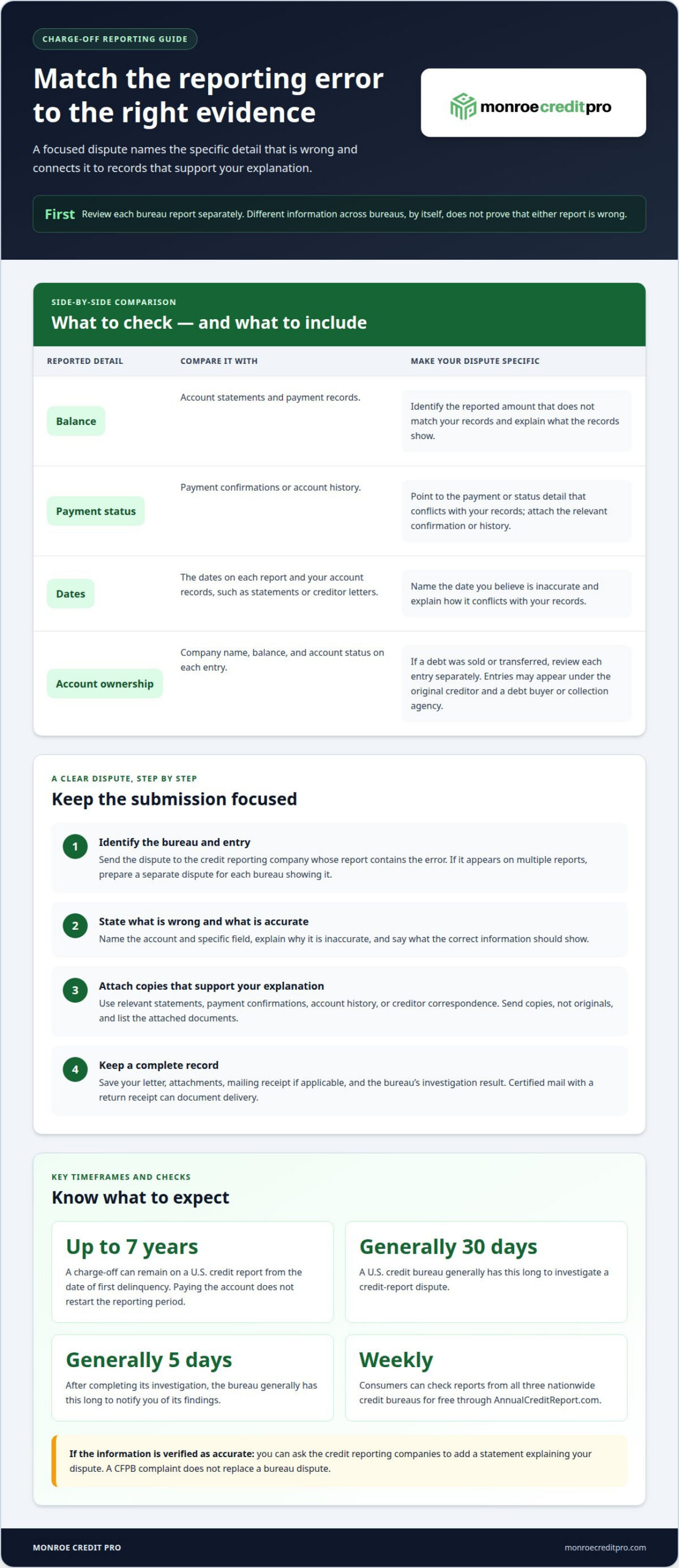
- Review reports from all three nationwide credit bureaus separately. Their records can differ because creditors may report to some bureaus but not others. Consumers can check reports weekly for free through AnnualCreditReport.com. Compare the account’s balance, payment status, dates, and ownership across each report. A difference between bureau entries alone doesn’t prove an error or require removal; identify a detail that conflicts with your records before disputing.
- Send a focused dispute to the credit reporting company showing the error. State which account detail is wrong, explain why, and include copies of documents that support your account. A U.S. credit bureau generally has 30 days to investigate a credit-report dispute, according to the Federal Trade Commission. The bureau reviews the dispute and may contact the company that supplied the information. Keep copies of your submission and any investigation result.
- Track the response and choose your next step. According to the Federal Trade Commission, the bureau generally has five days after completing its investigation to notify you of its findings. If the charge-off is verified as accurate, review the explanation and supporting records; you can ask the credit reporting companies to add a statement explaining your dispute. You may file a CFPB complaint about a reporting problem, but a complaint doesn’t replace a bureau dispute. Whether you can sue depends on the facts and applicable law; seek legal advice about your situation.
Disputing inaccurate charge-off information
- Identify the exact detail you believe is wrong. Compare the charge-off entry with account statements, payment confirmations, and creditor letters. Look for a balance that doesn’t match, a payment status that misstates what happened, or a date that conflicts with your records. A dispute should identify a specific reporting error, not simply object to an accurate negative account. Different information across Equifax and another bureau, by itself, doesn’t prove that either report is wrong.
- Separate reporting errors from account disagreements. A charge-off may appear on reports from different bureaus because creditors choose where to report. If a debt was sold or transferred, entries may appear under both the original creditor and the debt buyer or collection agency. Review each entry separately. For example, before claiming that a duplicate-looking account is inaccurate, compare the company name, balance, and account status.
- Gather focused supporting documents. Match each disputed detail with evidence that addresses it. For an incorrect balance, include a statement or payment record showing the amount. For a payment-status error, use a confirmation or account history showing the payment for that month. Send copies, not originals, and keep a complete copy of your letter and attachments. A concise explanation connects each document to the specific correction you’re requesting.
- Submit a separate dispute to each bureau showing the error. You can dispute inaccurate charge-offs online, by mail, or by phone. A written letter gives you space to explain the disputed field and list enclosed records. Certified mail with a return receipt can document delivery. State the account name, identify the incorrect information, explain the accurate detail, and request an investigation. If you want an organized review of your credit entries, consider a review of disputed credit information.
- Keep the result with your records. A charge-off can be removed through a dispute only if its reported information is inaccurate, outdated, or unverifiable. Save the bureau’s response and compare any updated entry with your original records. If the disputed detail remains, use the response to clarify what still needs attention and which evidence supports your position.
Filing a dispute with the bureau reporting the error
- Identify the bureau and the exact entry. Send the dispute to the credit reporting company whose report contains the error. Name the creditor and account as they appear on that report, then identify the specific field, such as the balance, payment status, or date. This helps the bureau understand what needs review. If the account appears on more than one bureau’s report, prepare a separate dispute for each company showing the error.
- Explain the error and include supporting documents. What documents should you include when disputing a charge-off? Send copies of records that directly support your explanation, such as account statements, payment confirmations, or creditor correspondence. In your letter, state what is inaccurate, why it is wrong, and what the correct information should show. For example, if a payment is missing from the reported history, attach a confirmation showing that payment. Keep the originals and send copies with your dispute.
- Organize the submission for easy review. Put your name and contact details on the dispute, identify the account, and list each attached document. Keep your explanation focused on the reporting error, not unrelated account concerns. If you mail the letter, certified mail with a return receipt can provide a delivery record. Save a copy of the complete letter, enclosures, and mailing receipt so you can refer to the same evidence later.
- Track the investigation and read the result carefully. The bureau must investigate the dispute, forward it and relevant information to the company that supplied the data, and report its results to you. Compare the response with the detail you challenged. If the information is corrected, review the updated entry. If the bureau considers the dispute frivolous or irrelevant, it must explain its decision and reasons within five business days after making that decision. Keep that notice with your records and use its explanation to plan your next step.
How do I dispute a charge-off with the original creditor or debt collector?
- Send a specific dispute to the company reporting the account. Write to the original creditor or debt collector and identify the account. Describe the exact error, such as a balance that doesn’t match your records or an incorrectly reported payment status. Explain what the information should show and attach copies of supporting records. Keep a copy of your letter and everything you send.
- Dispute the entry with each bureau that reports it. Contact each credit reporting company separately if the same error appears on multiple reports. A dispute to the creditor or collector doesn’t replace a bureau dispute. Identify the same disputed detail in each submission and keep your explanations consistent. This gives each recipient a clear account of the information you believe is inaccurate.
- Track the investigation and response. Furnishers generally must investigate and respond to a credit reporting dispute within 30 days after receiving it. Record when the original creditor or collector receives your dispute, then save its response with your documents. If the company says the entry is accurate, compare its explanation with the account records and identify whether it addressed the specific error you raised.
- Handle a debt buyer’s entry separately. A sold or transferred charge-off may appear under both the original creditor and the debt buyer or collection agency. Review each entry’s balance, ownership, and status. If a collector contacts you about the debt, the Consumer Financial Protection Bureau says it must provide written debt validation notice within five days of its first attempt to contact you. Keep that notice with your related account records.
- Keep the paper trail organized. Save letters, delivery records, account statements, and responses together. If the original creditor corrects its records, follow up with the bureaus that still show the inaccurate detail. If the collector or creditor maintains the information, use its response to clarify what remains disputed and support any further communication.
Get structured help reviewing credit reporting if you need support organizing account details and dispute records.
Monroe Credit Pro
Monroe Credit Pro can help you review a charge-off entry and decide what to address next. If you’re unsure which report details warrant a dispute, a Credit Report Audit can help organize the information for review. Credit Correction and Professional Credit Repair support clients addressing inaccurate, outdated, or unverifiable credit reporting. Credit Counseling can help clarify broader credit questions.
Turn to Monroe Credit Pro for structured guidance reviewing your reports, understanding potential errors, and planning your next steps. The focus is on the information in your credit file and actions suited to your situation, without promising a particular outcome.
Contact Monroe Credit Pro to discuss support with your credit report concerns.
Move forward with a clearer credit record
Bring order to the information behind the account. Keep your records together, identify the detail that needs attention, and make sure your communication reflects what you can document. If you need to dispute inaccurate charge-offs, a focused approach can help you stay organized and explain each concern clearly.
Monroe Credit Pro offers Credit Restoration, Professional Credit Repair, and Credit Correction for people addressing credit-report concerns. Seek guidance when you want help understanding which information may need attention and how to approach your next steps.
Contact Monroe Credit Pro to discuss your credit concerns and move ahead with a more structured plan.
Frequently Asked Questions
What is a charge-off?
A charge-off is an accounting classification a creditor uses for a seriously delinquent account. It records the creditor’s decision to treat the balance as a loss, but it doesn’t cancel the borrower’s obligation. For example, a credit card issuer may charge off an unpaid balance while money is still owed. The account’s status and the debt itself are separate matters.
Can my account be charged off even if I’ve been making payments?
Yes, if your payments haven’t brought the account current and the creditor still considers it seriously delinquent. A payment can reduce what you owe without satisfying past-due amounts or the required payment schedule. Review your statements and payment history to see how each payment was applied. If the reported status doesn’t match that history, identify the specific month and relevant records.
How do I dispute an error on my credit report?
Identify the exact information you believe is wrong, then send a dispute to the credit reporting company showing it and the company that supplied it. For example, if a statement shows a payment posted but the report marks that month delinquent, explain the mismatch and include a copy of the statement or confirmation. Keep copies of your explanation and supporting records.
How might this affect credit reports and credit scores?
A charge-off is negative account information and may affect how a scoring model evaluates your credit history. The effect varies by scoring model and the rest of your credit file, so one person’s score change won’t predict another’s. Lenders may also review account details when assessing an application. Focus on accurate reporting and steady management of current accounts rather than expecting one correction to determine every outcome.
So does that mean I don’t owe the debt any longer?
No. A charge-off doesn’t erase the debt or confirm that it has been paid. The creditor may continue collection efforts or sell the account, after which a buyer or collection agency may contact you. If a new company claims the balance, keep its correspondence and compare the account details with your records before responding or disputing any reporting error.
What is a charge-off on a credit report?
On a credit report, a charge-off is an account notation indicating that the creditor classified the debt as a loss. The entry may also show details such as the balance, payment status, and dates. Read those fields together: the charge-off label alone doesn’t tell you whether every reported detail is accurate. If a specific field conflicts with your records, address that discrepancy directly.