



A new bill isn’t automatically a credit-building bill. A practical plan for how to fix credit fast starts with paying credit obligations on time and gradually lowering what you owe. There are no quick fixes, and some people may notice small FICO Score changes within three to six months.
Focus first on the bills you can pay today. An error on your credit report may also be affecting your score, so review the information behind it before opening new accounts or changing your routine. Checking your own credit report does not affect your score.
Learn which bills can support credit-building, why older accounts may matter, and how to address missed payments and collections. Then review your credit reports and dispute inaccurate, outdated, or unverifiable information to focus on accurate records and steady progress.
Key Takeaways
- Pay credit obligations on time and gradually reduce what you owe; consistent habits matter more than a quick fix.
- Review older accounts before closing them, since the length of your credit history can affect your score.
- Address missed payments and collections by reviewing account details and building a consistent record of on-time payments.
- Compare your reports from Equifax, Experian, and TransUnion, then dispute inaccurate information with the bureaus and the original creditor.
What type of bills can I use to improve my credit scores?
Credit-building bills usually involve credit accounts, such as credit cards. If you’re deciding how to fix credit fast, start with on-time payments and manageable balances. Changes take time, so focus on consistent habits rather than shortcuts.
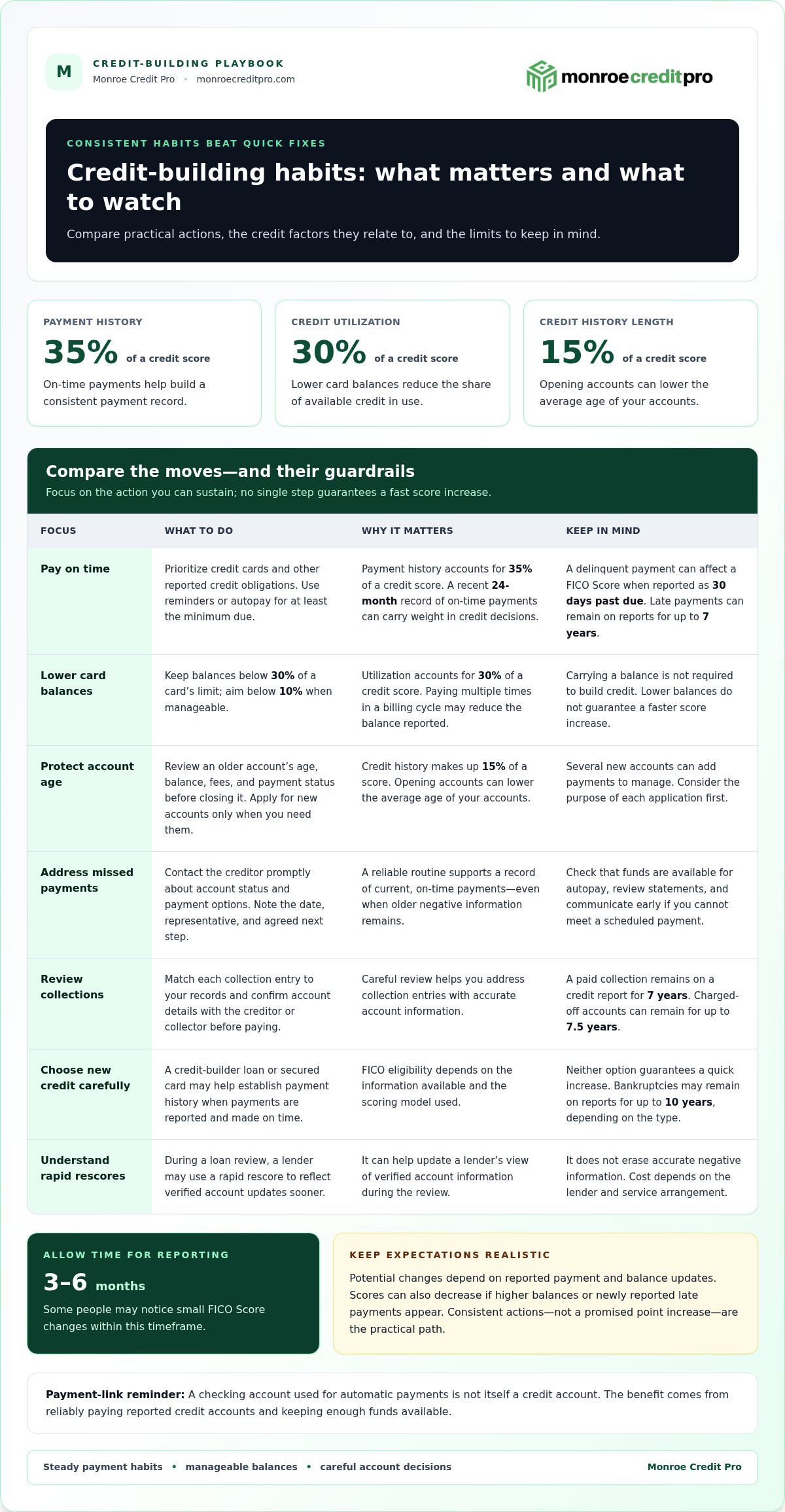
- Pay credit accounts on time. Prioritize credit cards and other reported credit obligations. A delinquent payment can affect a FICO Score when reported as 30 days past due. Use reminders or automatic payments for at least the minimum due, then pay more when your budget allows.
- Reduce card balances. Credit utilization accounts for 30% of a credit score. Keep balances below 30% of the card’s limit, and aim below 10% when manageable. A lower balance reduces the share of available credit in use, but carrying a balance isn’t required to build credit.
- Allow reporting time. People working to improve FICO Scores may notice small changes within three to six months. Potential increases depend on reported payment and balance changes. Scores can also decrease if higher balances or newly reported late payments appear. A realistic approach to how to fix credit fast is to focus on consistent actions, not a promised point increase.
- Understand rapid rescores. A rapid rescore may help a lender reflect verified account updates sooner during a loan review, but it doesn’t erase accurate negative information. The cost depends on the lender and service arrangement, so ask about charges before proceeding.
- Choose new credit carefully. A credit-builder loan or secured credit card may help establish payment history when payments are reported and made on time, but neither guarantees a quick increase. FICO eligibility depends on the information available and the scoring model used. According to the Federal Trade Commission, bankruptcies may remain on credit reports for up to 10 years, depending on the type of bankruptcy.
Keeping older credit accounts open
Protect established accounts before opening new ones. Credit history makes up 15% of a credit score, and opening accounts can lower the average age of your credit accounts.
- Review older accounts before closing them. Check each account’s age, balance, fees, and payment status. An older credit card with no balance may support a longer history, while a fee or spending temptation may affect whether keeping it open makes sense.
- Limit applications to accounts you need. Several new accounts can reduce your average account age and add more payments to manage. Consider the purpose of each application first. Credit scoring models also consider the timing of credit requests, including the difference between seeking one loan and opening multiple credit lines.
- Use linked bank accounts to support payment routines. Connecting a checking account for automatic payments can help you avoid overlooking a due date. The bank account itself is not a credit account, so the benefit comes from making payments on reported credit accounts reliably and keeping enough funds available.
- Identify what a linked account represents before removing it. Check whether the account is individual, joint, or an authorized-user account. Removing a bank connection used for payments is different from changing how a credit account appears on your report. If an account is unfamiliar or inaccurately associated with you, record the details for review.
- Keep account records organized. Save statements, payment confirmations, and notes about accounts you close or retain. These records help you compare account details and explain a discrepancy if information later appears differently on a credit report.
What credit repair scams and illegal promises should I avoid? Avoid promises to erase accurate, verified negative information or guarantee a particular score. Be cautious of anyone urging you to dispute information you know is correct or misrepresent your identity.
If account age, payment links, or report details are difficult to sort out, credit counseling support can help you organize the next steps.
Managing missed payments and collections
Payment history accounts for 35% of a credit score. Late payments can remain on credit reports for up to 7 years, so build a reliable routine and address collection entries carefully.
Paying early can help you avoid missed due dates, while making multiple card payments may reduce the balance reported during a billing cycle. Neither action guarantees a faster score increase.
- Automate minimum payments. Set autopay for at least the minimum due, then schedule a reminder several days before the due date. Check that your bank account has enough funds and review each statement for changes. This creates a backup routine without replacing regular account reviews.
- Prioritize consistent payment history. A recent 24-month history of on-time payments can carry weight in credit decisions, even after serious past delinquencies. Make each current payment on time and track due dates in one calendar. Lenders can consider recent account activity alongside older negative information.
- Ask about missed payments promptly. Contact the creditor to discuss the account status and payment options. Keep notes of the date, representative, and agreed next step. If you can’t meet the scheduled payment, communicate early rather than letting the account go unattended.
- Review collections before paying. Match each collection entry to your records and confirm the account details with the creditor or collector. A paid collection account remains on a credit report for seven years. Charged-off accounts can remain for up to 7.5 years, so keep payment records and correspondence.
- Check whether rent payments are reported. Rent helps credit scores when payment information is furnished to credit bureaus and considered by the scoring model used. Review your report to see whether rental history appears; don’t assume rent payments are included automatically.
Checking credit reports for errors
Review your reports before deciding which account details need correction. Compare each bureau’s records, then document errors and follow the dispute process.
-
Get Credit Reports and Monitor Scores
Request reports from Equifax, Experian, and TransUnion. A complete credit audit uses all three, since the information in each file may differ. Check personal details, account ownership, balances, payment status, and inquiries. Checking your own report or score does not affect your credit score. For ongoing updates, use a credit-monitoring tool and note which score model it displays.
- Compare entries with your records. Match each account against statements, payment confirmations, and creditor correspondence. Look for a payment shown as late despite your confirmation, a balance that differs from your records, or an account you do not recognize. Note the bureau, account name, and specific error. Keep copies of supporting documents, and do not dispute accurate information.
-
Dispute Errors and Track Investigations
Submit a clear dispute to the bureau reporting the error and contact the original creditor. Include the account details, explain what is inaccurate, and attach copies of relevant records. The investigation period depends on the dispute process, the information provided, and whether further documentation is needed. Keep submission dates, reference numbers, and replies together so you can track each investigation.
- Review the outcome and follow up. Compare the updated report with your original records and confirm whether the disputed entry changed. If the error remains, organize any new evidence and send a focused follow-up explaining what is still unresolved. Check reports from all three bureaus, because correcting one file does not automatically correct the others.
If inaccurate entries are difficult to organize, request a credit report audit to get support reviewing your report details.
Monroe Credit Pro: Credit Restoration
Monroe Credit Pro offers Credit Restoration for people who need structured support reviewing credit concerns and identifying practical next steps. If report errors, missed payments, or collections feel difficult to manage alone, Professional Credit Repair and Credit Correction can help address those concerns. Credit Counseling can also support a clearer plan for managing credit responsibilities.
Gather your credit reports, account statements, and dispute correspondence before seeking support. These records help organize the issues you want to address and keep the discussion focused on your circumstances. Credit restoration works alongside consistent financial habits, including paying obligations on time and reviewing report updates.
If you’d like support assessing your credit concerns and planning next steps, contact Monroe Credit Pro.
Build your next step into a lasting routine
Credit progress is easier to maintain when each action has a place in your financial routine. Set a recurring time to review account activity, confirm payments are scheduled, and save correspondence about unresolved concerns. At each review, note what changed, what still needs attention, and the next action you can take.
If you’re deciding how to fix credit fast, focus on accurate records and consistent habits, not shortcuts that claim to rewrite your history. Your plan can change as account information is updated. Focus on the next practical step, and allow time for corrections or payment adjustments to appear in your records.
For organized support with the next phase, Monroe Credit Pro can help you assess a path forward. Connect with Monroe Credit Pro to discuss the credit concerns you want to address. Start with the records you have, identify the issue that matters most, and move forward with a clearer process. Steady, informed action builds a stronger foundation for the work ahead.
Frequently Asked Questions
What steps can improve a credit score quickly in the United States?
Start by reviewing your current accounts, then address the item most likely to affect your credit file. Bring overdue accounts current, reduce card balances where possible, and check that creditors report account details accurately. Avoid applying for credit without a clear need. For example, compare a card statement with its reported balance before deciding whether repayment or a reporting error needs attention.
How long does it take for credit score improvements to appear on a credit report?
Creditors generally send updates on their own reporting schedules, and credit bureaus typically update reports every 30-45 days. Improvements may take longer to show in a score: people working to improve FICO Scores may notice small changes within three to six months. Check the report after an account update, then review the score using the same scoring model for a useful comparison.
How much can paying down credit card balances improve a credit score?
There is no fixed score increase tied to a particular payment amount. The effect depends on the balance compared with the card’s limit, other information in your credit file, and the scoring model. Calculate utilization by dividing the reported balance by the credit limit. Then check the next reported balance to see whether the lower ratio appears in your file.
How can I check my credit reports for errors and dispute them for free?
Request your reports through the free report access provided for Equifax, Experian, and TransUnion, then compare each file with your statements and payment records. Dispute inaccurate entries directly with the bureau reporting them and the original creditor. Include copies of relevant documents, keep a dated record of each submission, and review the resulting report for any changes.
Are credit repair companies worth it, and what fees and risks should I know about?
Paid support can be useful if you want help organizing reports, identifying inaccuracies, and managing dispute correspondence. Compare the service’s scope and payment terms before enrolling, and keep copies of agreements and account records. Avoid claims of guaranteed score increases or promises to remove accurate, verified negative information. You can also review your reports and submit disputes yourself.