



An inaccurate or incomplete credit report entry can be disputed, and a clear explanation backed by documents gives the review a practical starting point. U.S. credit reporting agencies generally must investigate a disputed item within 30 days, according to the Office of the Law Revision Counsel, U.S. House of Representatives. Professional credit dispute assistance can help you organize the issue and present it clearly.
It’s understandable to feel frustrated when information on your credit report doesn’t match your records. You can dispute an error online or by mail, depending on how much detail and documentation the issue requires. Accurate negative information is different: it generally remains on a report for a set period and can’t be removed simply because it affects your credit.
This guide explains how to identify and dispute inaccurate or incomplete information, what to include in your submission, and when an online dispute or mailed letter may suit your situation. You’ll also learn how long negative items may remain and how Monroe Credit Pro’s Credit Correction and Credit Report Audit services can support a structured review.
Key Takeaways
- Separate outdated but accurate negative entries from information that is genuinely incorrect or incomplete before deciding what to challenge.
- Build a focused dispute by describing the specific error and organizing documents that support your explanation.
- Choose an online submission for a straightforward correction or consider a mailed letter when the issue needs more detail or supporting records.
- Use a structured report review to identify potential errors and determine whether professional support could help organize your next steps.
How long do negative items stay on your credit report?
- Review your reports from Equifax, Experian, and TransUnion separately. A creditor may report an account differently to each bureau, so compare account status, balances, and dates. Consumers can access free reports from all three bureaus every week. Mark each error, such as a payment shown as late despite a receipt, before preparing a dispute.
- Separate accurate negative information from errors. Most negative marks can remain on U.S. credit reports for seven years, while bankruptcies may remain for up to 10 years. Accurate information generally cannot be removed early just because it harms a credit profile. A charge-off or collection should be challenged when the account, amount, ownership, or reporting details are inaccurate.
- Dispute specific inaccuracies in writing and explain why each entry is wrong. For example, identify a duplicate collection account or an account that never belonged to you. Include copies of supporting records, such as payment confirmations, and keep the originals. If a credit reporting company finds information inaccurate or incomplete, it must update the report to make it accurate and complete.
- Understand the protections that apply before responding to a credit repair offer. The Fair Credit Reporting Act governs credit-report disputes, while the Credit Repair Organizations Act sets requirements for credit repair companies. No company can promise to erase accurate negative information. Treat advice to dispute information you know is accurate, conceal your identity, or pay before work begins as serious red flags.
- Choose support based on clear processes, not promises or proximity alone. To find professional credit dispute assistance, look for a written explanation of its services, costs, and consumer rights. Ask the relevant state licensing authority whether a license applies and whether complaints are recorded. The CFPB’s Consumer Complaint Database publishes complaints anonymously, offering another way to review reported concerns through Monroe Credit Pro.
How do I dispute an error on my credit report?
You have the right to dispute errors on your credit report and ask for inaccurate or incomplete information to be investigated. Track the review, examine the outcome, and follow up on corrections.
-
Track Bureau Investigation Timelines
Record the date each bureau receives your dispute and keep its acknowledgment with your documents. Under the Fair Credit Reporting Act, U.S. credit reporting agencies generally must investigate a disputed item within 30 days, according to the Office of the Law Revision Counsel, U.S. House of Representatives. They must send investigation results within five business days after completing the investigation, according to the same office.
-
Review Dispute Investigation Results
Compare the bureau’s response with the specific credit report errors you identified. Check whether each item was corrected, removed, or left unchanged, and compare any updated account status or balance with your supporting records. Save the response notice and updated report. If the explanation doesn’t address a disputed detail, note the gap before deciding on your next written response.
-
Check Furnisher Investigations and Corrections
Follow up with the furnisher, such as the lender or collection company that supplied the information. Furnishers generally must investigate and respond to a credit reporting dispute within 30 days of receiving it. Provide the same relevant documents and identify the exact account detail in question. Compare the furnisher’s response with the bureau’s findings, especially if the two accounts of the investigation differ.
-
Confirm Removal of Inaccurate Information
Review the updated credit report to confirm the bureau changed or removed information found inaccurate or incomplete. If a lender or creditor can’t confirm an item’s validity, or the information resulted from fraud, the bureau must remove it. If the dispute remains unresolved, you may be able to add a written statement explaining your disagreement to your credit report. Code Section 1681i(b).
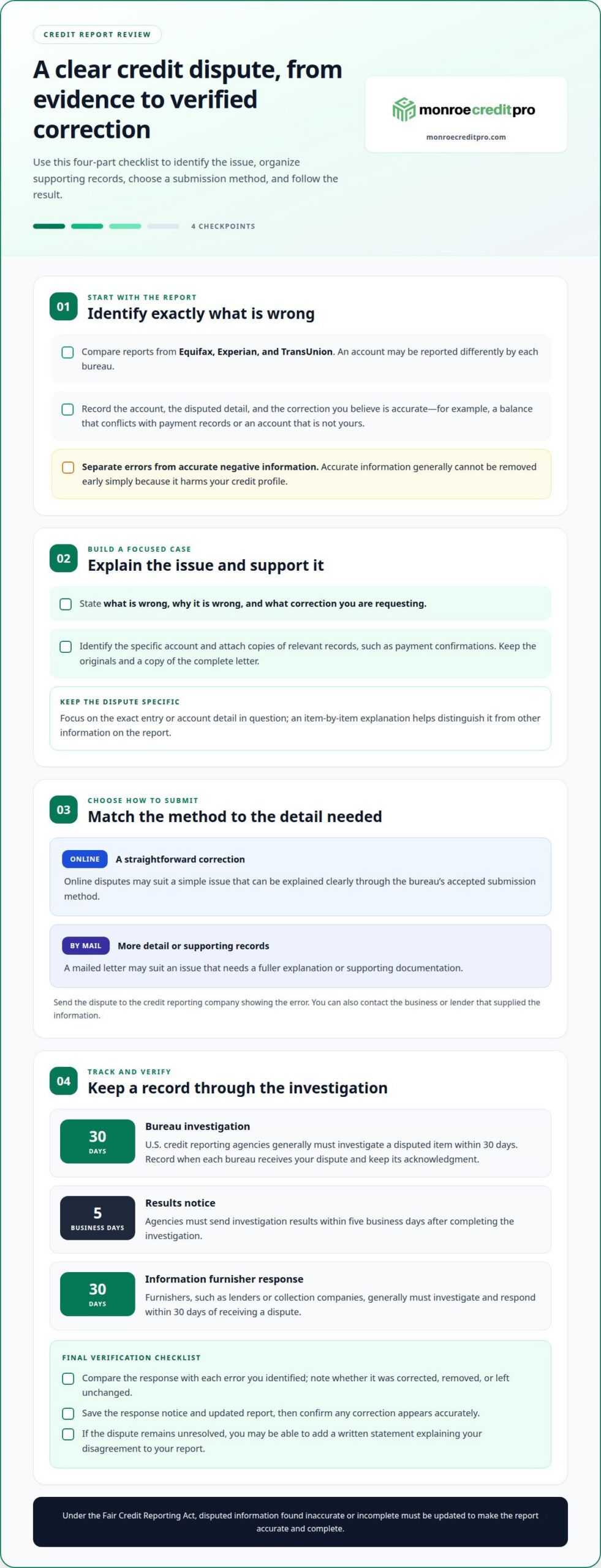
Disputing inaccurate or incomplete credit information
Professional credit dispute assistance can include reviewing entries, organizing supporting documents, and preparing clear disputes. Whether you act independently or seek professional support, identify the exact information in question and explain why it needs correction.
-
Identify Inaccurate or Incomplete Information
Compare the entry across reports from Equifax, Experian, and TransUnion. Record the account, the disputed detail, and the correction you believe is accurate. For example, note a balance that differs from your payment records or an account that isn’t yours. If identity theft may explain an entry, state that clearly. Don’t dispute accurate information simply because it affects your credit score.
-
Prepare Dispute Letter Information
Write a focused statement explaining what is wrong, why it is wrong, and what correction you’re requesting. Identify the account using the details shown on the report, then attach copies of relevant supporting documents. Keep the originals and a copy of the complete letter. A clear, item-by-item explanation helps distinguish the disputed information from other entries.
-
Dispute Information With the Business
Send the dispute to the credit reporting company displaying the error, using its accepted submission method. You can also contact the business or lender that supplied the information. Name the specific entry and include the same explanation and supporting documents. If you’re challenging a payment status, for example, identify the payment and provide a record supporting your account.
-
Contact the Creditor or Furnisher
Contact the company that furnished the information directly if its records may contain the error. Ask it to investigate the named account detail and correct any information it finds inaccurate or incomplete. Keep the response with your dispute records, then compare it with any bureau update. Federal protections give consumers a process for disputing credit-report information, but the claim should remain factual and specific.
Online disputes versus mail letters
Choose the submission method that fits the error and your supporting evidence. A simple correction may suit an online form, while a detailed dispute may benefit from a mailed letter.
-
Choose Online Disputes or Mail Letters
Use an online dispute for a straightforward correction, such as a misspelled address or an account marked open after closure. Online forms guide you through the credit bureaus’ submission steps, but save a copy of each entry and attachment. Choose mail when the issue needs a detailed explanation or extensive supporting documents. For significant disputes, send the letter by certified mail and keep the receipt with your records.
-
Write the Dispute Letter
Address the letter to the credit reporting agency showing the inaccurate information, such as Experian. Identify the account and the exact detail you’re challenging, then explain why it’s wrong and what correction you’re seeking. Keep the writing factual and organized. For example, distinguish a payment-date error from a disagreement about an account balance. Include copies of relevant records, not originals, and retain a complete copy of the letter.
-
Include Sample Letter Contents
Use a sample dispute letter as a structure, not as a substitute for your own facts. Include your identifying details, the account information, a concise explanation, the requested correction, and copies of records supporting your claim. Section 611 of the Fair Credit Reporting Act is identified as the basis for a credit dispute letter. Keep a copy of every page and attachment, whether you submit online or by mail.
For help preparing a clear, organized dispute, get support with your credit correction.
Monroe Credit Pro: Professional Credit Repair
Monroe Credit Pro offers Professional Credit Repair to help organize and address credit report concerns. Consider this support when disputed entries are difficult to sort through, corrections need structured follow-up, or you want guidance on next steps.
Credit Correction focuses on inaccurate or incomplete report information, while Credit Counseling can help you understand options for managing your credit situation. Credit Restoration supports a broader effort to rebuild your credit profile. The right service depends on the work you need, whether that means addressing a specific reporting error or reviewing wider concerns.
Bring the disputed account details and supporting records to the discussion so the issue can be addressed clearly. Contact Monroe Credit Pro to talk through your credit concerns and potential next steps.
Take the Next Step Toward a Clearer Credit Profile
Turn your review into a steady plan for moving forward. Professional credit dispute assistance can bring structure to a complicated process, especially when you want support assessing concerns and organizing the work ahead. Focus on accurate reporting and informed decisions, not pressure to change information that is correct.
Monroe Credit Pro offers Professional Credit Repair, Credit Restoration, and Credit Correction to support consumers working through credit report concerns. The right starting point depends on whether you’re addressing a specific reporting issue or seeking broader credit support. A clear discussion of your goals can help establish a practical next step, since different situations call for different approaches.
When you’re ready to discuss your credit concerns, contact Monroe Credit Pro. Bring your questions and the records that help explain them. Each organized step can make the path ahead easier to approach.
Frequently Asked Questions
How does credit repair work?
Credit repair focuses on identifying and disputing inaccurate, outdated, or unverifiable information in credit reports. For example, a service may help organize records about a collection account that appears twice and dispute the duplicate entry. Credit repair is protected under the Fair Credit Reporting Act. Accurate, verified negative information cannot be removed by a legitimate credit repair company.
Should I Send a Letter to All Three Bureaus?
Send a dispute to each bureau that displays the error, rather than automatically mailing identical letters to all three. Equifax, Experian, and TransUnion maintain separate reports, and an entry may appear differently on each. Review the reports first, then tailor each submission to the account details shown. Keep a copy of each letter and the documents you included.
What is a Dispute Letter?
A dispute letter is a written request asking a credit bureau or information provider to investigate a specific report entry. It identifies the account, explains the disputed detail, and states what correction you seek. For instance, you might explain that a listed balance doesn’t reflect a payment, then include a copy of the payment record. Keep the letter factual and retain a complete copy.
When should I seek professional help for credit report issues?
Consider seeking professional credit dispute assistance if several report entries need review, supporting records are difficult to organize, or you’re unsure how to manage correspondence. Monroe Credit Pro reviews reports from Equifax, Experian, and TransUnion, and clients must provide those reports. Professional support can structure the review and dispute process, while your records and clear account of each issue remain essential.
How do I dispute inaccurate information with Equifax, Experian, and TransUnion?
Identify which reports contain the inaccurate entry, then submit a separate dispute to each bureau reporting it. Specify the account and detail in question, explain the correction you’re requesting, and provide copies of relevant supporting records. Save each submission and response together. If identity theft is involved, state that clearly and include documentation supporting your explanation.
How long does a credit bureau investigation take?
Generally, credit bureaus have up to 30 days to investigate a dispute and respond to your request. The period begins when the agency receives the dispute, and the information furnisher may also review the information. Keep the submission date and response together so you can track the process and assess the outcome.