



A credit report dispute needs a clear explanation and relevant records, not simply a request to remove an item. Effective bureau dispute cycles management starts with identifying information that may be inaccurate, explaining the concern in writing, and including copies of supporting documents. You can dispute information with the credit reporting company and the company that supplied it.
For credit reporting teams, each case needs to move through intake, investigation, response, and follow-up with a reliable record of what happened. That process can feel difficult to manage when information arrives through different channels or responses require careful tracking. This guide explains how disputes are handled, what to look for in responses, where compliance risks can arise, and how automation can support consistent case management. You’ll see how structured workflows can make each cycle easier to track while keeping attention on the evidence and the outcome.
Key Takeaways
- See how professionals organize dispute intake, investigation, and follow-up so each case has a clear status and next step.
- Learn what makes response letters useful, including how to communicate findings and keep a record of case decisions.
- Recognize compliance risks that can arise when investigations, documentation, or response handling are inconsistent.
- Explore how automation can support case tracking and repeatable workflows while keeping review and decision-making grounded in the dispute details.
How does a professional manage a credit report dispute?
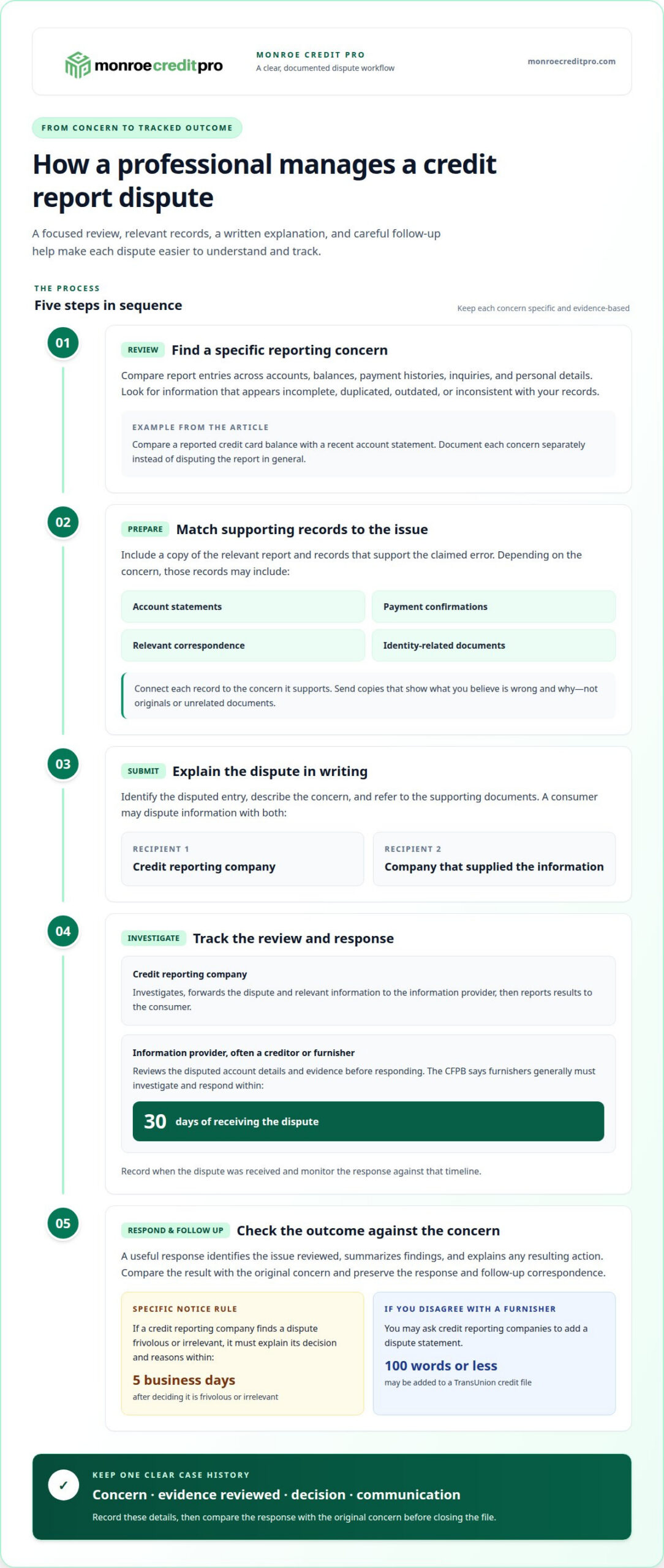
A professional reviews the report, identifies a specific error, and organizes supporting evidence before submitting a dispute. The process tracks each response and next step under applicable credit reporting requirements.
How a Professional Reviews Report Inaccuracies
Compare report entries across accounts, balances, payment histories, inquiries, and personal details. Look for information that appears incomplete, duplicated, outdated, or inconsistent with your records. For example, compare a reported credit card balance with a recent account statement. Document each concern separately so the dispute addresses a specific item rather than challenging the report in general. A focused review also helps identify which records may clarify the issue.
Evidence for a Professional Dispute
Provide a copy of the relevant report and documents that support the claimed error. Depending on the issue, useful records may include account statements, payment confirmations, correspondence, or identity-related documents. Connect each record to the reporting concern it supports. Include copies that show what you believe is wrong and why, rather than sending originals or unrelated documents.
Professional Disputes with Credit Reporting Companies
The professional prepares a written explanation that identifies the disputed entry, describes the concern, and references the supporting documents. A consumer may dispute information with the credit reporting company and the company that supplied it. The reporting company investigates, forwards the dispute and relevant information to the information provider, then reports results to the consumer. FCRA compliance depends on clear case records, accurate communication, and tracking the response. If a credit reporting company finds a dispute frivolous or irrelevant, the Consumer Financial Protection Bureau says it must explain its decision and reasons within five business days after deciding.
Creditor Verification and Response Deadlines
The information provider, often a creditor or furnisher, reviews the disputed account details and evidence before responding. According to the Consumer Financial Protection Bureau, furnishers generally must investigate and respond to a credit reporting dispute within 30 days of receiving it. A professional records when the dispute was received, monitors the response, and compares the result with the original concern. If the consumer disagrees with the furnisher’s decision, they may ask credit reporting companies to add a dispute statement. A statement of 100 words or less may be added to a TransUnion credit file.
Professional dispute resolution procedures and response letters
A documented process makes each step visible, from receiving a concern to recording its outcome. A response should identify the issue reviewed, summarize the findings, and explain any resulting action in clear language. Keep the explanation consistent with the investigation record and the evidence considered.
Engagement also matters when a disagreement involves several parties or needs structured discussion. The Bureau of Land Management’s Collaborative Action and Dispute Resolution Program offers tools to prevent, manage, or resolve conflict with stakeholders involved in public lands. Its approach illustrates how a process can incorporate stakeholder skills, resources, and information as conditions change. It is an agency example, not a credit reporting procedure.
Within the Bureau of Land Management, the Dispute Resolution Specialist implements alternative dispute resolution, agency policy, and training. The Deputy Dispute Resolution Specialist serves as acting specialist during an absence and assists with National Guard ADR program management. These roles show why written responsibilities and continuity plans matter: cases need an accountable lead, even when staffing changes. In a credit dispute workflow, documented ownership helps prevent unanswered correspondence or unclear follow-up.
For the National Guard ADR program, the Office of the General Counsel and the National Guard Equal Opportunity Compliance office provide guidance, collect and report ADR data, help parties obtain third-party neutral support, and provide requested conflict-management training. Those functions illustrate practical conflict prevention: clarify responsibilities, share relevant information, and establish a process for escalation before positions harden. They do not replace credit reporting investigation requirements.
A useful response procedure records the concern, evidence considered, decision, and next action. If a report entry remains disputed, the file should preserve the response and any follow-up correspondence. Readers seeking structured professional credit repair can use support to organize concerns and communicate them clearly.
Compliance risks and examination attention
Repeated disputes can create confusion when they lack a clear, evidence-based reason; professional support should keep each issue specific and documented. Compliance review also depends on consistent records, sound decisions, and clear communication.
Compliance Risk Reduction
Reduce operational risk by recording the issue, evidence reviewed, decision, and communication in one case history. Then compare the response with the original concern before closing the file. The Consumer Financial Protection Bureau webinar covered the Fair Credit Reporting Act and Equal Credit Opportunity Act in relation to credit reporting. Teams can use those frameworks to structure review controls, train staff, and spot inconsistent handling across similar cases.
Repeated Disputes and Credit Repair Risks
Repeatedly challenging the same entry without a new concern or relevant evidence can make the case history harder to interpret. Distinguish an unresolved issue from a new dispute about a different reporting detail. Before taking another step, review previous responses, identify what remains contested, and organize any additional evidence. This helps keep the dispute clear and focused.
For a CFPB complaint, a professional can help organize a dated account of the reporting problem, prior dispute actions, responses, and supporting records. The consumer can use that organized information to explain the concern and the decision or resolution sought. Keep the complaint factual and consistent with the documents. This preparation supports a clear account without treating a complaint as a substitute for the underlying dispute process.
The National Guard Equal Opportunity Compliance office has a distinct alternative dispute resolution role. Its personnel may provide ADR guidance and help parties obtain neutral support, but they may not give legal advice or represent or advocate for an individual. That boundary is a useful reminder: clarify whether a support role offers process guidance, advocacy, or legal services before relying on it.
Automated dispute case management
Automation helps teams organize dispute work, but it should support careful review rather than replace it. A structured workflow can capture the consumer’s concern, relevant account, supporting records, assigned reviewer, and current status. For example, a case about a payment marked late can be routed with the account statement and reporting entry attached. Staff can then see what needs attention without searching separate files.
Build the process around clear stages: intake, evidence review, investigation, response tracking, and closure. At each stage, record the action taken and the next step. A task queue can surface cases awaiting review or a response, while a consistent case history helps staff understand previous decisions. Automated reminders may support follow-up, but a trained reviewer still needs to assess the specific facts and approve consumer-facing explanations.
Before submitting a dispute, check that the records identify the account and clearly explain the concern. A missing account detail or unclear dispute reason can make the issue harder to assess. This check helps organize the file; it does not determine whether the reported information is accurate. Keep explanations clear and tailor them to the specific issue.
Automation needs oversight. Credit Bureau Roundtable discussions have addressed inconsistencies in e-OSCAR and conflicting guidance from credit bureaus. That makes exception handling important: route unclear cases for review, preserve the source information, and document how staff resolve the issue. Periodic quality checks can reveal repeated data-entry problems or patterns in cases that stall between stages.
The practical takeaway is to automate visibility and routine routing, while keeping evidence assessment and decisions under human review. To organize a personal report concern with structured support, get help reviewing your credit report.
Monroe Credit Pro
Monroe Credit Pro can help bring structure to credit report concerns when an inaccurate or unclear item needs professional review. Its Credit Report Audit can support a closer look at report entries, while Credit Correction and Professional Credit Repair address consumer credit concerns through the relevant offerings. Credit Counseling may also help readers understand their credit situation and consider practical next steps.
Professional support may help if you’re unsure how to organize a reporting concern, understand a response, or choose a next step. Bring together the relevant report entries and supporting records so the issue can be reviewed clearly. Credit repair can address inaccurate, outdated, or unverifiable information, but accurate, verified negative information cannot be removed simply because it is unfavorable.
For support with your credit concerns, contact Monroe Credit Pro.
Move Forward With a Clearer Credit Plan
A disciplined approach to bureau dispute cycles management can make the next decision more deliberate. For consumers, that means choosing support that focuses on accurate reporting, clear documentation, and practical steps suited to their credit concerns. Progress begins with understanding what needs attention and having a professional review the path forward.
Monroe Credit Pro offers Credit Restoration, Professional Credit Repair, and Credit Correction for consumers addressing credit report concerns. Monthly dispute cycles include bureau correspondence and progress tracking. Begin with a free credit consultation, followed by a three-bureau audit and a dispute strategy tailored to the concerns identified.
Contact Monroe Credit Pro to discuss your credit concerns and take a steady step toward stronger financial footing.
Frequently Asked Questions
Are disputes free?
You can dispute information directly with a credit reporting company without hiring a credit repair professional. If you choose paid assistance, review the written service contract, the services it describes, and your cancellation rights before signing. Credit repair organizations must provide a written contract and a three-day right to cancel without charge. They may not charge before work is performed.
Can I dispute a collection charge?
Yes, you can dispute a collection entry if you believe it is inaccurate, outdated, or unverifiable. Examples include an account that is not yours, a duplicate entry, or a balance that does not match your records. You can dispute the information with the credit reporting company and the company that supplied it. Accurate, verified negative information is not eligible for removal simply because it is unfavorable.
What does a typical dispute investigation process look like?
A typical investigation starts when the credit reporting company receives a dispute and reviews the issue and relevant information. It forwards the dispute details to the information provider, which examines the account records and responds. The reporting company then shares the results with the consumer. Afterward, compare the outcome with the specific item challenged and keep the notice for reference if another reporting issue appears.
What happens if the creditor does not respond within the required time?
The next step depends on the credit reporting company and its handling of the case. TransUnion says it will delete disputed information from a U.S. credit report if the creditor does not respond within 30 days. That statement describes TransUnion’s process, not an automatic outcome for every bureau or dispute. Review the investigation results and updated report to see how the specific item was handled.
What are credit bureau dispute cycles, and how does a professional manage them?
Credit bureau dispute cycles move from the initial review through investigation, response, and follow-up. Effective bureau dispute cycles management keeps each case organized and distinguishes a new issue from a repeated challenge. For example, a later concern about a different balance detail should have its own supporting records and case history.
How does a professional manage a credit bureau dispute from filing to resolution?
A professional starts by identifying the reporting entry and clarifying your concern. They organize relevant records, prepare the dispute, track correspondence, and compare the response with the issue raised. If information remains disputed, they can explain possible next steps, such as asking a credit reporting company to add a consumer statement. The process includes recording the outcome and any follow-up.