



A credit report error needs a specific dispute, not just a note that something looks wrong. A credit bureau correspondence service can prepare and mail a clear dispute to the relevant nationwide credit bureaus and the creditor that supplied the information. The Federal Trade Commission says furnishers generally must investigate and respond within 30 days of receiving a dispute.
When credit report records, supporting documents, and multiple organizations are involved, it helps to handle each dispute carefully. This article explains how a credit bureau correspondence service can organize mail disputes, what details make a letter specific, and why you may need to contact both a credit bureau and the company that supplied the information. You’ll also learn what to expect after sending letters and how professional credit correction can help you understand your options.
Key Takeaways
- A well-prepared mail dispute identifies the inaccurate information and organizes supporting records for review.
- Using the correct mailing address helps direct correspondence to the appropriate credit bureau.
- Coordinated letters can address errors with the nationwide bureaus and the company that supplied the information.
- Learn how professional credit correction can help organize the process and clarify your next steps.
How Can a Credit Bureau Correspondence Service Correct or Dispute Inaccuracies on My Credit Reports by Mail?
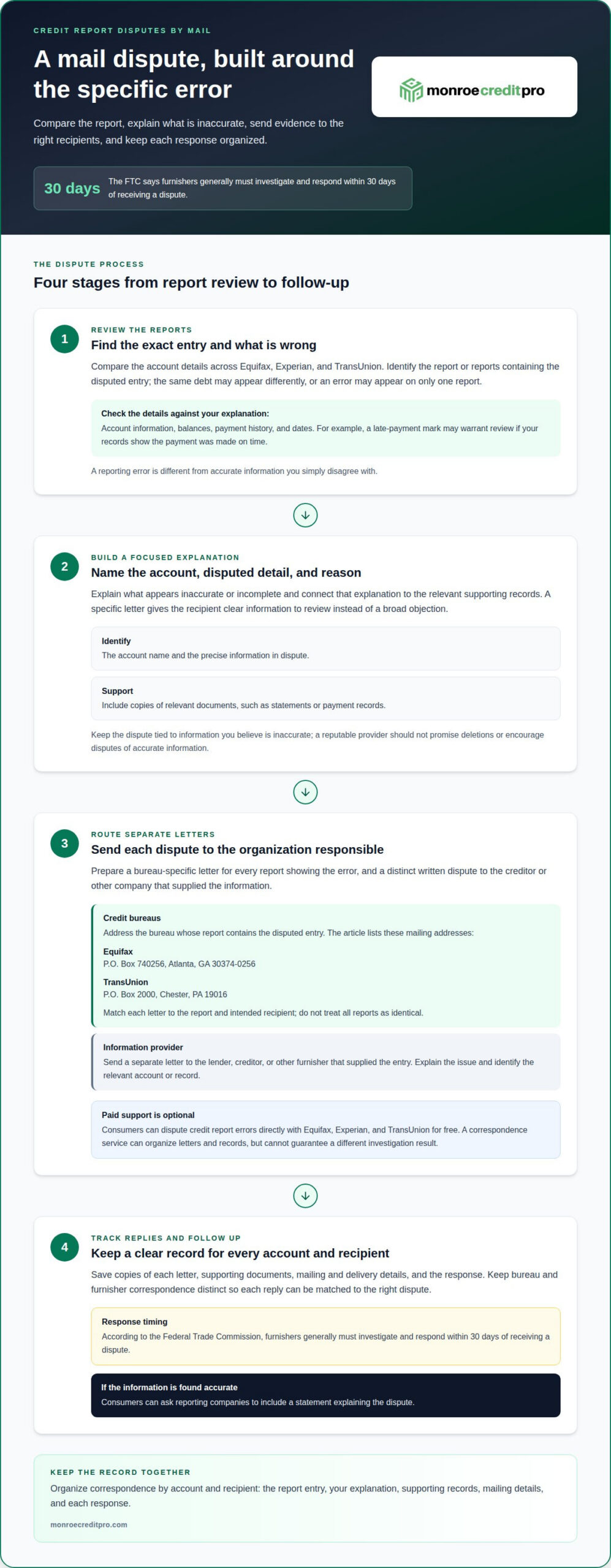
A credit bureau correspondence service organizes a dispute around the specific error, relevant records, and organizations involved. It can help prepare clear letters to credit reporting companies and the information provider.
-
Identify Inaccurate or Incomplete Report Entries
Provide your credit reports and identify the entry you believe is wrong or incomplete. A professional reviews account details, balances, payment history, and dates against your explanation. For example, a payment marked late may warrant review if your records show it was paid on time. The review helps distinguish a reporting error from accurate information you simply disagree with.
-
Share Dispute Details and Supporting Records
Give the service the account name, the specific information in dispute, and why you believe it is inaccurate. Include copies of relevant documents, such as statements or payment records. Creditors and financial institutions often rely on professional billing and statement mailing services like Integrity Statements to deliver these critical paper records, which serve as essential verification during a review. A credit bureau correspondence service uses those details to prepare a focused letter rather than a broad objection. A reputable provider should explain what work it handles and avoid promising deletions or encouraging disputes of accurate information.
-
Submit the Dispute to Relevant Companies
A professional prepares separate correspondence for each reporting company showing the error and the company that supplied the information. Consumers can dispute credit report errors with Equifax, Experian, and TransUnion directly for free, so paid support is optional; individuals handling their own letters can use services like Postal Methods to upload, print, and mail documents directly. Credit repair assistance differs from a DIY dispute by organizing correspondence and records; it cannot guarantee a different investigation result.
-
Track Responses and Consider Follow-Up
Keep copies of letters, supporting documents, and mailing records organized by account and recipient. According to the Federal Trade Commission, furnishers generally must investigate and respond to a credit reporting dispute within 30 days of receiving it. The service can track replies and help identify unresolved issues. If the information is found accurate, consumers can ask reporting companies to include a statement explaining the dispute.
How a credit bureau correspondence service uses credit bureau mailing addresses
Correct routing helps a mailed dispute reach the organization responsible for reviewing it. A professional matches each letter to its recipient and purpose, then keeps the correspondence organized by account.
- Match the bureau with its dispute address. Equifax disputes by mail go to P.O. Box 740256, Atlanta, GA 30374-0256. TransUnion disputes go to P.O. Box 2000, Chester, PA 19016. A credit bureau correspondence service uses the intended recipient and dispute purpose to prepare each packet. Separate envelopes help keep a consumer’s explanation and records connected to the correct bureau.
- Direct separate letters to information providers. A bureau dispute and a letter to the creditor or company that supplied the entry go to different recipients. If an account appears incorrectly on two reports, prepare correspondence for each bureau and the furnisher. Each letter should identify the account and explain the issue, rather than combining unrelated disputes.
- Distinguish dispute mail from other requests. Credit reporting companies may use different mailing instructions for different requests. Identify whether a letter concerns a credit report dispute or another consumer matter before preparing it. Do not assume one address serves every purpose. The account, disputed entry, and intended recipient determine how correspondence should be separated and labeled.
- Keep mailing and phone records distinct. A written letter documents the dispute and materials sent; a phone number supports a different contact method. Log the recipient, mailing address, enclosed records, and delivery details for each packet. This makes it easier to match replies with the relevant account and bureau. A credit bureau correspondence service can also keep follow-up records together.
For help organizing report information before correspondence is prepared, explore credit report audit support.
How a credit bureau correspondence service contacts the three nationwide credit bureaus
Coordinate separate, targeted letters for Equifax, Experian, and TransUnion when their reports show disputed information. A credit bureau correspondence service can organize each bureau’s packet while keeping the creditor’s review distinct.
- Identify which reports show the entry. Compare the disputed account details across Equifax, Experian, and TransUnion. The same debt may appear differently across reports, or an error may appear on only one. Match each letter to the bureau report containing the specific inaccurate information instead of treating all reports as identical.
- Prepare a bureau-specific explanation. Each letter should identify the consumer, the account, and the disputed detail. Explain what appears inaccurate or incomplete, and connect that explanation to supporting records. For example, if an account status differs between reports, identify the status shown by each bureau. This gives each agency clear information to investigate.
- Write separately to the information provider. Send a distinct written dispute to the lender, creditor, or other furnisher that supplied the entry. If a credit card payment is incorrectly shown as late, address the relevant payment record and account directly. The bureau and furnisher are separate recipients, so track their letters and responses separately.
- Organize the investigation records. Keep a file for each recipient with the letter, evidence, delivery details, and response. A credit bureau correspondence service can use these records to identify which agency has replied and which dispute remains open. Credit reporting companies investigate disputes, forward relevant information to furnishers, and report results to consumers.
- Review replies against the original claim. Compare each response with the specific entry challenged, not just the overall report. If a furnisher finds the information accurate, a consumer can ask the credit reporting company to include a statement explaining the dispute. Separate files help connect each agency’s response to the item under review.
Which companies offer credit bureau correspondence services in the United States?
In the United States, correspondence support is associated with professional credit repair and credit correction services. Before choosing a service, assess the work it includes, such as preparing letters, organizing documents, and tracking responses.
- Identify the type of provider you need. Credit repair businesses may help prepare and manage disputes about inaccurate report entries. Credit counseling focuses on guidance about a consumer’s broader credit situation. The services can overlap, but they are not identical. If you need help with a mailed dispute, look for a provider that clearly describes how it supports the process.
- Compare the stated work, not just the label. A company’s description should explain whether it reviews reports, prepares letters, organizes supporting records, and tracks responses. For example, a service that offers general counseling may not manage mailed dispute correspondence. Check that the described work matches the account error you need addressed.
- Assess the dispute approach. Each letter should be based on the consumer’s records and a clear explanation of the disputed item. A provider should distinguish an inaccurate balance from a payment history the consumer simply dislikes. Avoid companies that promise deletions, encourage challenges to accurate information, or rely on identical letters for unrelated accounts.
- Review how communication and records are handled. Understand what documents the provider needs, how it shares prepared correspondence, and how it tracks bureau and creditor responses. A clear process helps you follow which company received a letter and which account a reply concerns. Keep your own copies of dispute materials and delivery records.
If professional guidance fits your situation, explore credit correction support for a more organized dispute process.
Monroe Credit Pro
Monroe Credit Pro helps consumers understand credit report concerns and identify practical next steps. A Credit Report Audit supports a structured review of your reports from Experian, Equifax, and TransUnion. Credit Correction and Professional Credit Repair address inaccurate, outdated, or unverifiable entries, while Credit Counseling can help clarify how a dispute fits your broader credit goals.
Consider this support when comparing your reports, organizing account concerns, or deciding how to proceed with a bureau or information provider. Monroe Credit Pro offers a free initial credit consultation and three-bureau credit audit. The goal is to help you understand your options, not to promise that disputed information will be removed. Contact Monroe Credit Pro to discuss your credit report concerns.
Take the Next Step Toward Clearer Credit Records
Accurate correspondence starts with understanding what needs review and why. If preparing and coordinating a dispute feels difficult, a credit bureau correspondence service can bring structure to the process. Choose support that treats your records carefully, explains its role, and focuses on information you believe is inaccurate.
Monroe Credit Pro offers Credit Restoration, Professional Credit Repair, and Credit Correction to help consumers address credit report concerns. Start with a conversation about your situation and the guidance you need. Consumers can dispute information they believe is inaccurate, but accurately reported negative information may remain on their credit reports.
Contact Monroe Credit Pro to discuss your credit report concerns. You can move forward with a more organized plan, one considered step at a time.
Frequently Asked Questions
How can a credit bureau correspondence service prepare a dispute letter?
A service can help turn your account of an error into a focused, item-specific letter. For example, if an account shows a balance you have already paid, the letter can identify the entry and explain the discrepancy. Review the finished details for accuracy, especially account identifiers and the reason for the dispute, before sending correspondence.
Can a credit bureau correspondence service help challenge a late payment on a credit report?
Yes, if the reported late payment may be inaccurate or incomplete. A service can help organize records, such as a payment confirmation or account statement, around the specific month and account. If the payment history is accurate and verified, a credit repair company cannot remove it. A dispute should address a reporting error, not an unfavorable but correct payment record.
How can a credit bureau correspondence service dispute incorrect or incomplete information on a credit report?
A letter can identify the disputed entry, explain what information is wrong or missing, and connect the explanation to relevant evidence. For instance, if a report lists an account as open after it was closed, the letter can describe the mismatch and include a record supporting your account. Clear, focused correspondence distinguishes a specific reporting issue from a general objection.
When should a credit bureau correspondence service send a letter to all three bureaus?
Send separate disputes to Equifax, Experian, and TransUnion when the same inaccurate item appears on each report. If only one report contains the error, direct correspondence to that bureau; the information provider may also need a separate dispute. Base the decision on where the item appears, rather than contacting every bureau automatically.
What documents should I provide to a credit bureau correspondence service for my dispute?
Provide the report page showing the disputed entry, a concise explanation, and copies of records that support your position. For a balance discrepancy, that might include an account statement or payment confirmation; for an identity-related error, relevant identity or account records may clarify the mismatch. Send copies rather than originals, and include only documents related to the item under review.
What does the credit dispute process look like?
The process begins with identifying the specific report entry and preparing a dispute with supporting information. The credit reporting company reviews the claim, forwards relevant dispute details to the information provider, and reports its results to the consumer. If the information is found accurate, the consumer can ask the reporting company to include a statement explaining the dispute in future reports.