



Paying off debt can be the start of credit rebuilding, not the finish line. Clearing revolving credit card balances can reduce your credit utilization and may help your score. Knowing how to rebuild credit after paying off debt means combining that progress with steady, positive credit habits.
It’s natural to expect your score to change after paying off a balance. The effect depends partly on how the debt shaped your credit profile, and payoff alone doesn’t create a record of new on-time payments. Progress comes from managing accounts consistently over time.
This guide explains how utilization works and why a lower reported balance can matter. You’ll also learn ways to build positive payment history, review your credit reports for accuracy, and track changes over time. A clear process helps you spot progress and identify report issues that may need attention.
Key Takeaways
- Assess card balances against available limits to understand how utilization may be affecting your credit profile.
- Consider whether a secured card fits your situation, with professional guidance on reporting activity and manageable use.
- Evaluate an authorized-user arrangement carefully: account history and low balances can help, while the primary cardholder remains responsible for the debt.
- Track report accuracy and payment patterns over time so you can spot issues and measure progress without expecting an instant change.
Credit utilization
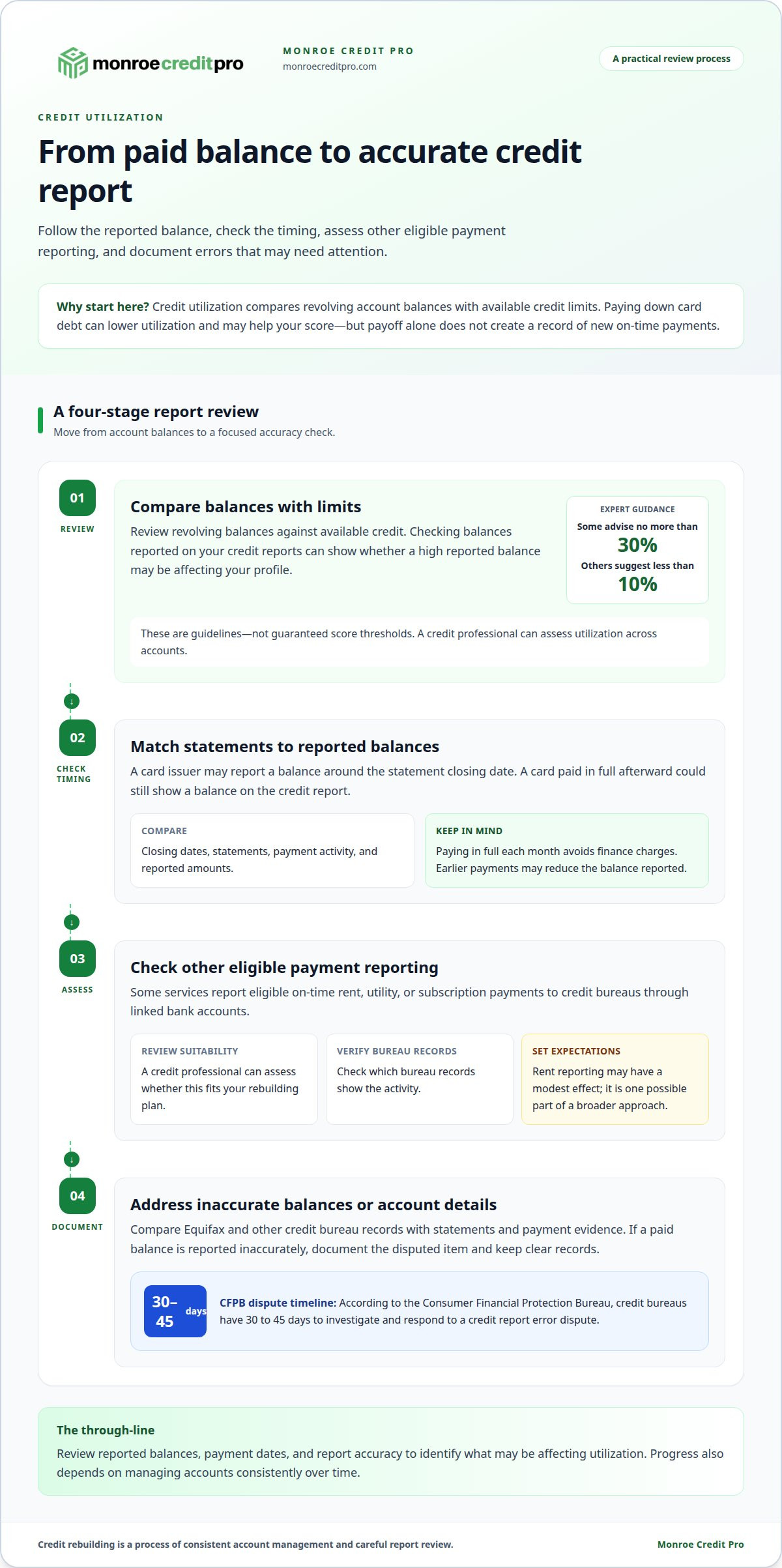
Credit utilization compares revolving account balances with available credit limits. Paying down credit card debt can lower utilization and may help your score. If you’re learning how to rebuild credit after paying off debt, checking the balances reported on your credit reports is a practical first step.
- Review balances against limits. A credit professional can assess utilization across accounts. Some experts advise using no more than 30 percent of total available credit; others suggest less than 10 percent. These are guidelines, not guaranteed score thresholds. This review can show whether a high reported balance is affecting the credit profile.
- Compare statement balances with payment activity. A card issuer may report a balance around the statement closing date. So a card paid in full afterward could still show a balance on the credit report. A professional can compare closing dates, statements, and reported amounts. Paying in full each month avoids finance charges, while earlier payments may reduce the balance reported.
- Assess rent, utility, and subscription reporting. Some services report eligible on-time payments to credit bureaus through linked bank accounts. A credit professional can assess whether rent, utility, or subscription reporting suits your rebuilding plan and which bureau records show the activity. Rent reporting may have a modest effect, so treat it as one possible part of a broader approach to how to rebuild credit after paying off debt.
- Address inaccurate balances or account details. A professional can compare Equifax and other credit bureau records with statements and payment evidence. If a paid balance is still reported inaccurately, the disputed item can be documented. According to the Consumer Financial Protection Bureau, credit bureaus have 30 to 45 days to investigate and respond to a credit report error dispute. Clear records support a focused correction request.
Review reported balances, payment dates, and report accuracy to identify what may be affecting your utilization.
How long does it take to rebuild credit?
Rebuilding credit typically takes several months to over a year, depending on the issues affecting the score and consistent on-time payments. A secured card can add positive payment activity, but only if the account reports it.
-
Get Professional Guidance on Using a Secured Credit Card
Ask a credit professional to assess whether a secured credit card fits your current profile and budget. Plan a small, predictable purchase and pay the balance in full each month. Avoid carrying a balance just to build credit, since secured cards may have higher annual percentage rates than most cards.
-
Have a Credit Professional Check Secured Card Reporting
Check whether the card issuer reports account activity to the credit bureaus. If it doesn’t report payments, the account won’t add that payment history to your credit profile. Compare the account status and payment history with your credit report to spot possible errors. This differs from becoming an authorized user, where the effect depends on another person’s account history and management.
-
Consider a Credit-Builder Loan
Ask a credit professional to assess whether a credit-builder loan complements a secured card. Costs depend on the loan’s terms, including any interest or fees; review the total repayment obligation before agreeing. On-time payments can contribute to a positive record when reported, but taking on a loan that strains your budget can make consistent payments harder.
Also discuss the risks of credit-repair scams before paying for help. Be cautious of promises to remove accurate negative information or guarantee a particular score; no company can make accurate history disappear through a payment. A professional review should focus on report accuracy, realistic actions, and clear costs. For individualized guidance, explore professional credit guidance.
Becoming an authorized user on a credit card
Review the account’s payment history, balance, and credit limit before considering an authorized-user arrangement. A credit professional can help assess how those factors may affect your credit profile.
- Assess the primary cardholder’s account. Ask a credit professional to review whether the card has a strong payment record and low balances. A well-managed account may strengthen your profile if its history appears on your credit report. The primary cardholder remains legally responsible for the debt, so discuss the arrangement and its expectations clearly before proceeding.
- Confirm the arrangement’s role in your plan. An authorized user can build credit without using the card. A professional can consider whether the account adds useful history alongside your existing accounts, including any secured credit cards. Don’t treat another person’s credit limit as your own spending capacity. The goal is to benefit from sound account management, not add charges or create financial strain.
- Review the 15/3 strategy against statement dates. A credit professional can assess whether this timing approach fits your payment routine. It involves one payment around 15 days before the statement closes, followed by another three days before closing. For a statement closing on the 30th, the example dates are the 15th and 27th. Treat these as timing examples, not a requirement for every card.
- Plan to pay card balances in full. Paying a credit card balance in full each month avoids finance charges. A professional can help map due dates and statement closing dates against the account’s credit limit and reported balance. For example, review whether a planned charge leaves room for routine expenses before the statement closes. This can help keep spending manageable while building a consistent payment record.
- Track what appears on your reports. Compare account details across each credit bureau after the arrangement begins. A professional can assess whether the authorized-user account appears and whether its balance or payment history is accurate. If the account’s reporting changes, that may affect your credit score. Review the updated information before making further decisions about card use or another authorized-user arrangement.
Monitoring credit and building positive payment history
Track payment patterns alongside report accuracy. Consistent payments build positive activity, while regular report reviews can reveal negative entries that may need attention.
-
Have a Credit Professional Check Credit Reports and Dispute Errors
Gather your reports from the three nationwide credit reporting companies. According to the Federal Trade Commission, consumers can get a free printed copy of each credit report every 12 months through AnnualCreditReport.com. A credit professional can compare account details, balances, and payment records across reports. If an entry appears inaccurate, they can help organize supporting documents and submit a dispute to the relevant bureau.
-
Get Professional Guidance on Making On-Time Payments
Build a payment plan around each account’s due date, income schedule, and available funds. A credit professional can help map car loan payments alongside credit card bills, then identify a workable reminder or payment routine. Consistent on-time payments can be an important part of maintaining or rebuilding credit. For a buy-here, pay-here auto loan, confirm that on-time payments are reported before relying on it to build credit history.
-
Get Professional Guidance on Managing Late Payments
Contact a credit professional promptly if a payment is late or an account is already past due. In the United States, payments 30 days or more past due can be reported as late, and late payment information generally remains on a credit report for 7 years. A professional can review the account status, help prioritize bringing payments current, and check whether the reported history matches account records. Avoid ignoring a negative entry; accurate information and errors require different next steps.
For structured help reviewing credit reports and payment history, request credit monitoring support.
Monroe Credit Pro
Monroe Credit Pro offers Credit Restoration, Professional Credit Repair, Credit Correction, and Credit Counseling. Consider professional support if you’ve paid off debt but still see inaccurate account details, need help understanding your credit reports, or want a structured approach to rebuilding credit.
A Credit Report Audit can help identify report details that may need correction and clarify how your payment history and balances fit into your rebuilding plan. Start with a free credit consultation, followed by a three-bureau audit and dispute strategy. Credit rebuilding still depends on sustainable habits, including paying bills on time and managing balances responsibly.
For support with your credit rebuilding questions, contact Monroe Credit Pro.
Keep Building Toward Lasting Progress
Understanding how to rebuild credit after paying off debt is a starting point, not a finish line. Make credit decisions part of a routine that fits your finances and priorities. Review your progress regularly, respond thoughtfully to changes, and focus on habits you can sustain. A past setback doesn’t define what comes next.
Professional guidance can help bring structure to that process. Monroe Credit Pro offers support for people working through credit concerns and seeking a clearer path forward. If you want help assessing your situation and deciding on practical next steps, contact Monroe Credit Pro.
Move forward one considered decision at a time. Consistent habits give your credit profile room to develop, and informed choices can help you approach the future with greater confidence.
Frequently Asked Questions
Can paying off old debt improve my credit score?
Yes, paying off old debt can improve your credit profile, especially when it reduces revolving card balances and utilization. A paid collection may affect scoring differently depending on the model: FICO 8 can count paid collections, while newer FICO and VantageScore models usually ignore them. Payment status and score impact aren’t the same, so review which account type and scoring model apply before interpreting a change.
Does checking my credit hurt my score?
No. Checking your own credit report is a soft inquiry and doesn’t affect your score. Reviewing reports before applying for an apartment or credit product can help you spot unfamiliar accounts without adding a hard inquiry. Keep your reports and review dates together so you can compare account details and reported balances over time.
How do I get my credit score up 100 points in one month?
A 100-point increase in one month is possible but uncommon, and no particular action can guarantee it. First identify what is weighing most on your profile: high revolving balances, reporting errors, or recent missed payments may call for different steps. Prioritize accurate corrections and manageable on-time payments. Judge progress against the same score model, since scores can differ across bureaus and models.
How long does negative information generally stay on your credit report?
Delinquencies can remain on U.S. credit reports for up to 7 years, while closed accounts can remain for up to 10 years. These timelines don’t mean every negative item affects a score equally throughout that period. Negative information generally has less effect as it ages, then eventually drops off. Review the account details and dates to distinguish an aging entry from a possible reporting error.
Should I close old accounts after paying them off?
Not automatically. Keeping an older account open may help maintain a longer credit history, provided it has no fees or spending issues. Before closing a paid account, consider its age, annual costs, and whether leaving it open could lead to unplanned charges. If you keep it open, review it regularly to spot unfamiliar activity and stay on top of spending.
How does paying off debt affect your credit score?
The effect depends on the debt and your overall credit profile. Paying off a revolving balance can reduce utilization, while closing an account may change your available credit and mix of open accounts. Paying off debt doesn’t erase accurate payment history. Compare the account’s reported balance and status before and after payoff, then consider the change alongside other score factors.