



Ongoing credit monitoring can alert you to changes in your credit reports, such as new accounts and hard inquiries, so you can review unfamiliar activity. The Consumer Financial Protection Bureau says monitoring services may cover reports from one or more of the three nationwide credit reporting agencies: Equifax, Experian, and TransUnion. Understanding ongoing credit monitoring benefits also means knowing the limits: monitoring can flag potential problems, but it doesn’t stop fraud or improve your score by itself.
It’s reasonable to want a clearer view of what’s changing and what those changes mean for your credit health. This article explains how monitoring works, what account and inquiry alerts can reveal, and how reviewing report changes may help you address errors or harmful credit behaviors. You’ll also learn how monitoring fits into a longer-term approach to credit score improvement, so you can use it as a practical tool, not a promise of a particular result.
Key Takeaways
- Check which credit reports a monitoring service covers, since coverage may include one or more nationwide credit reporting agencies.
- Review alerts about unfamiliar accounts or hard inquiries promptly, then investigate activity you don’t recognize.
- Use report changes to spot errors and credit habits that may be affecting your score; monitoring itself doesn’t raise it.
- Understand that scores can vary across providers, so focus on the underlying report information and trends.
- Pair monitoring with practical follow-up, such as disputing inaccurate information and addressing negative credit behaviors.
What are credit monitoring basics?
Credit monitoring tracks activity reported to your credit files and sends alerts when information changes. Services may cover reports from one or more of the three nationwide credit reporting agencies: Equifax, Experian, and TransUnion, according to the Consumer Financial Protection Bureau.
Suspicious Activity Alerts
Alerts flag credit changes that may need review, such as a new account, late payment, or hard inquiry. An unfamiliar loan or card could signal identity theft, while a late payment might indicate a reporting error or missed bill.
Monitoring can detect possible fraud, but it can’t stop someone from using stolen identity information or opening an account. Treat an unexpected alert as a prompt to check the related credit report and identify the account or inquiry before deciding what to do.
Credit Report and Score Changes
Credit report alerts notify you when reported information changes, while score alerts show that a tracked score has moved. An app might flag a new balance, a credit-limit change, or a score shift after account activity appears on a report.
Use each alert as a reason to review the details, not as a full explanation. For example, a score change may follow a reported late payment, but checking the report helps you see what changed and whether the information looks accurate.
Bureau Monitoring Coverage
Credit monitoring services differ in which bureau reports they track. One service may cover a single bureau, while another may cover all three. Equifax, Experian, and TransUnion can hold different information because some lenders report to only one or two agencies, or don’t report to them.
An alert from one bureau won’t necessarily show activity reported elsewhere. Compare services by checking which reports they include. Broader coverage can give you a wider view, while reviewing each report separately can reveal differences among bureau files.
Costs and Free Monitoring Options
Credit monitoring costs vary, and some services charge monthly or yearly fees. Features, bureau coverage, and bundled identity-related tools can affect what a service provides. Compare coverage and alerts rather than assuming every plan tracks the same activity.
Consumers can access free credit reports annually and order reports from each of the three nationwide agencies. This lets you review report information, but it isn’t necessarily the same as receiving ongoing alerts from a monitoring service. Check reports to spot changes between alerts or compare information across bureaus.
Credit monitoring services can send notifications when reports change, including when new inquiries or accounts appear or potential fraud is detected. Alerts can help you identify possible identity theft or fraud and respond promptly. A response may include closing accounts opened in your name and filing error reports with all three credit bureaus.
Reviewing credit reports can help you spot inaccuracies, potential identity theft, fraud, and credit behaviors that may hurt your score. Use notifications as a cue to check the relevant report and decide whether the activity is familiar or needs correction.
Credit monitoring and credit score improvement
Monitoring can make score changes easier to investigate, but it doesn’t improve a score by itself. Its value is in helping you connect report updates with credit habits and decide what to address.
Personalized Insights and Score Trends
Some monitoring apps provide educational resources, personalized insights, and dashboards showing score trends. These features can help you interpret changes over time instead of treating a single score update as the whole picture.
For example, an app might show a downward trend alongside reported late payments or changing balances. Review the report details behind that trend, then consider whether the information is accurate and what actions could improve the underlying account history.
Monitoring’s Effect on Credit Scores
Checking your credit through a monitoring service doesn’t affect your score. It may create a soft inquiry on your report, but soft inquiries don’t affect scores.
Keep monitoring separate from actions that involve applying for credit. A lender’s hard inquiry can affect a score, while viewing a report or score through a monitoring service doesn’t. An inquiry alert gives you information to review, not an automatic score penalty.
Score guidance can help organize your next steps, but compare recommendations with your reports. Payment history, balances, and recent credit applications can help explain score changes. If an alert shows a late payment, check whether the record is accurate. If balances changed, review the reported amounts and account details.
Scores can differ across services because lenders may use different types of credit scores when making lending decisions. An Experian score, for example, may not match a score shown elsewhere. Compare trends within the same service and examine report details rather than treating scores from different providers as directly interchangeable.
Some credit score simulators estimate how an action, such as applying for a loan or opening or closing an account, might affect a score. Use the estimate to explore possible outcomes before acting. It’s a planning aid, not a record of what has already happened on your reports.
Monitoring can also help you notice collections or late payments that may need attention. First review the account information and reporting status. If the information is accurate, changing the credit behavior behind it may support improvement over time. If it appears incorrect, review the report details before deciding how to address it.
Make the information useful: track score trends, connect alerts with report changes, and choose actions based on the details. Monitoring provides visibility; consistent payment habits and careful credit decisions can support score improvement.
Monitoring new accounts and credit inquiries
A credit monitoring service can alert you when a hard inquiry appears or an account is opened in your name. These alerts give you a timely reason to compare the activity with applications you remember making.
A hard inquiry may follow a credit application, so an alert alone doesn’t establish identity theft. Check the inquiry name and date against a recent credit-card, loan, or account application. If you didn’t authorize it, review the related report for connected changes before taking action.
Review new-account alerts just as carefully. Compare the account type, opening date, and reported balance with your records. An unfamiliar card with a new balance may point to unauthorized activity, while an account you recently opened may simply be appearing on your report.
Look for related changes, too. A monitoring app may report new inquiries, opened accounts, credit-limit changes, or significant balance changes. One unexpected item can prompt a closer review of the surrounding information. Several unfamiliar changes, such as an inquiry followed by a new account, make prompt investigation especially important.
If an account or inquiry appears unauthorized, document the details and dispute inaccurate information with the credit bureaus. Contacting the creditor associated with an unfamiliar account can also help you address the activity. Credit monitoring can surface a warning, but it doesn’t close accounts or reverse a thief’s actions.
Protect information that gives access to your identity. Your Social Security number, monitoring login, and email account are sensitive. Use a unique password for your monitoring account, enable multifactor authentication when available, and access alerts through the service’s official app or website rather than links in unexpected messages.
Credit monitoring is one part of identity protection, not a substitute for other safeguards. A credit freeze can help prevent hard inquiries and criminals from opening credit accounts in your name. It may be useful if you’re concerned about exposed personal information, while alerts help you notice activity that reaches a monitored report.
Keep a simple record of alerts you investigate, including the date, bureau, account or inquiry name, and action taken. This can help you distinguish a known application from a suspicious change and follow up on a disputed inaccuracy. Reviewing the report itself, rather than relying only on a notification, shows you the details behind each alert.
Credit monitoring services can alert you when someone makes a hard inquiry into your credit history. That warning can draw your attention to activity, but it can’t show who made the inquiry or prove that an account was opened fraudulently. Treat an alert as a prompt to check the report and contact the relevant creditor if the activity is unfamiliar.
The example underscores why unfamiliar inquiries and accounts merit prompt review. Keeping records of what you find can support follow-up with the creditor and credit bureaus.
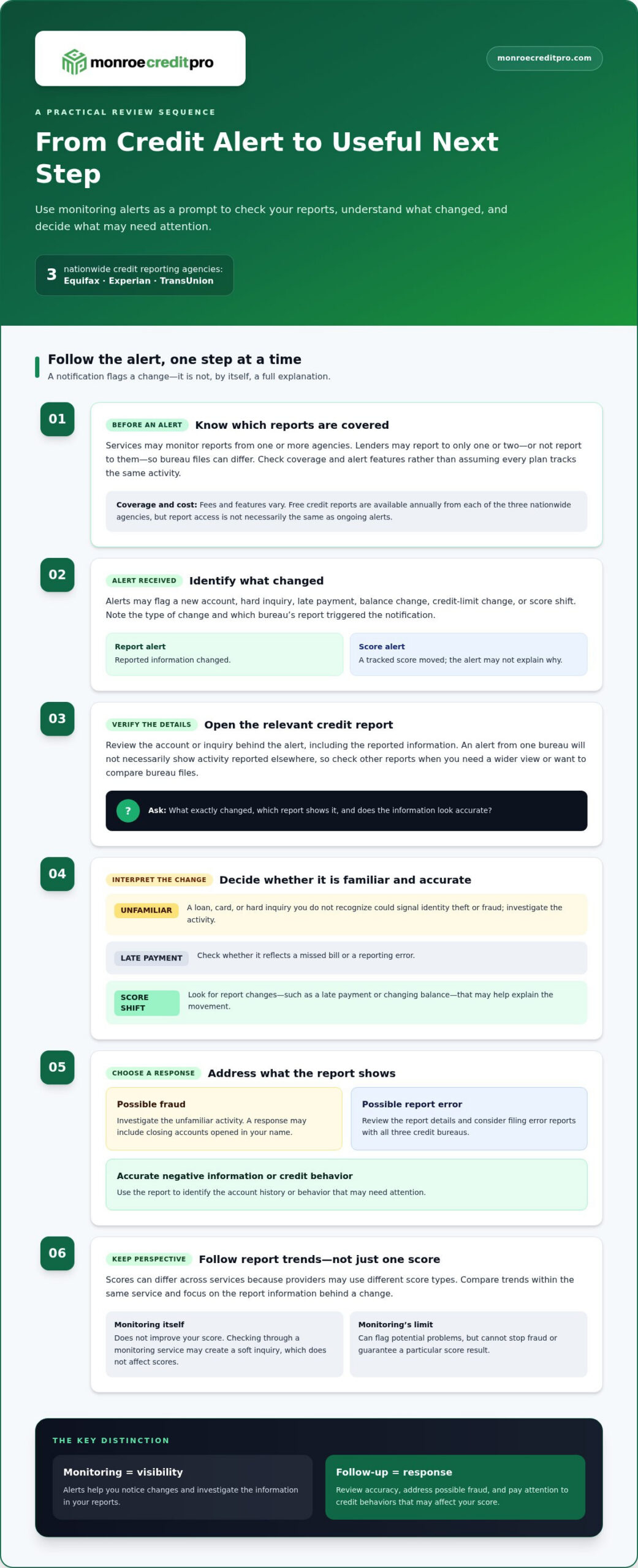
How credit monitoring works
Credit monitoring services look for activity added to the credit reports they cover, then notify you about detected changes. Some apps connect with credit bureaus to provide updates to your credit history or scores. Coverage matters because an alert reflects information available in the monitored reports, not every financial activity in your name.
After a lender or creditor reports activity, the information may appear on your credit report. A monitoring service can then detect a change, such as a new account, inquiry, balance, or payment status, and send an alert through its app, email, or another channel. The alert summarizes a change; reviewing the report helps you understand the details.
How quickly do credit monitoring alerts arrive after a change? Some services can send instant notifications after detecting a report change. Timing also depends on when a creditor reports activity and when the update reaches the service, so an alert may come after the original transaction.
Coverage affects what you see. Some lenders and creditors report to only two nationwide credit reporting agencies, one agency, or none. For example, a new account reported to one bureau may not appear in a service monitoring another bureau’s report. Checking bureau coverage helps explain gaps between alerts and your financial activity.
After a data breach, you can enroll in credit monitoring by selecting a service, creating an account, and providing the identity details needed to match your credit file. Review which bureau reports the service monitors, then set its available alert preferences. Keep your account credentials secure, especially if the breach exposed personal information used for identity verification.
Once monitoring begins, focus on the type of change rather than treating every notification as proof of fraud. A hard inquiry might match a credit application you made, while an unfamiliar account deserves closer review. Compare the account name, date, and balance in the alert with your records, then examine the related credit report.
Alerts can identify possible identity theft or reporting errors, but monitoring doesn’t stop fraud or correct inaccurate information. If a report shows an unfamiliar account, use the alert as a prompt to investigate and address the reported activity. If the change is a payment or balance update, compare it with your statements to understand why the report changed.
Monitoring provides a recurring view of reported activity, not a complete record of every transaction. A creditor’s reporting practices, the service’s bureau coverage, and the timing of report updates all shape what appears. Understanding these factors helps you interpret alerts accurately and act on suspicious credit report changes.
Benefits of credit monitoring
Credit monitoring turns changes in your credit history into information you can review and act on. Its clearest benefit is visibility: an alert about an unfamiliar credit card, loan, or inquiry can prompt you to inspect the report before the activity goes unnoticed. Ongoing credit monitoring benefits are greatest when an alert helps you identify a specific change and decide what to investigate.
That awareness can help you respond to suspicious activity with focused steps. Compare the account name, opening date, and balance with your records. If a credit card on a TransUnion report isn’t yours, contact the issuer and examine the report for related inaccuracies. Keep copies of alerts and account details to support follow-up.
Monitoring can also help distinguish an unexpected report change from a familiar credit decision. A hard inquiry might relate to a loan application you made, while a new account you don’t recognize calls for closer review. Whether an update is legitimate or unauthorized depends on report details and your records, not the alert alone.
Another practical benefit is a clearer view of what creditors have reported. A late payment, collection account, or changed balance can affect how your credit history appears to lenders. Reviewing the information helps you identify possible errors or recognize credit behavior that needs attention. Monitoring doesn’t erase accurate negative information, but it can help you address errors and make informed decisions.
- Spot unfamiliar accounts: Match the account name and opening date against your applications and statements.
- Review inquiries: Compare the listed creditor with credit applications you remember making.
- Check report accuracy: Look for incorrect balances, payment statuses, or personal details.
- Track patterns: Connect repeated late payments or changing balances with your credit management habits.
Monitoring has limits. It can alert you to possible identity theft, but it doesn’t prevent fraud, recover a stolen identity, or reverse a thief’s actions. A credit freeze and prompt responses to unfamiliar activity address different parts of the problem. Treat alerts as an early signal, then use the relevant report and account information to guide your next step.
Choose a response based on what the report shows: investigate unfamiliar activity, dispute inaccuracies, or address credit habits reflected in accurate entries. The ongoing credit monitoring benefits matter most when awareness leads to useful follow-through. If report errors or unresolved credit concerns are making that review difficult, get help reviewing your credit report and identifying the next step.
Monroe Credit Pro: Credit Restoration
Monroe Credit Pro offers Credit Restoration for people ready to address concerns in their credit history. If monitoring alerts reveal information you believe is inaccurate, Credit Correction and Professional Credit Repair can help you review and address those report concerns. Credit Counseling can also help you better understand credit choices and possible next steps.
Monitoring and restoration serve different purposes: alerts reveal reported changes, while restoration focuses on credit concerns that may need attention. Bring the specific report entries or alerts you want to discuss, such as an unfamiliar account or a payment record you believe is incorrect. A focused review can clarify what the information shows and which service fits your situation.
For support reviewing your credit concerns, contact Monroe Credit Pro to discuss your next step.
Turn Credit Awareness Into Your Next Step
Credit health grows through steady attention and deliberate decisions. Let the information in your credit file guide what you review next rather than treating a score as the whole story. Ongoing credit monitoring benefits matter most when awareness leads to informed action and a consistent plan.
If inaccurate or concerning report information is holding you back, Monroe Credit Pro offers Credit Restoration, Professional Credit Repair, and Credit Correction to help address credit concerns. Choose a next step that fits what you’ve found and the support you need to move forward.
Explore support from Monroe Credit Pro and take a constructive step toward stronger credit health. Progress begins with understanding your situation and acting with purpose.
Frequently Asked Questions
What are the benefits of ongoing credit monitoring?
Ongoing monitoring can help you notice report changes early and decide what deserves attention. If you’re preparing to apply for a mortgage, for example, reviewing your reports can help you identify unfamiliar entries or errors before a lender reviews your credit history. Alerts can also help you connect a change with a recent financial decision. Use the information to investigate, correct inaccuracies, or adjust credit habits as appropriate.
Does checking your credit through monitoring affect your credit score?
No. Checking your own credit through a monitoring service doesn’t lower your score. The service may create a soft inquiry on your report, but soft inquiries don’t affect credit scores. This is different from a lender’s hard inquiry, which can occur when you apply for credit. Viewing your score in an app, for example, is different from submitting a credit-card application.
What are the limitations and risks of credit monitoring services?
Credit monitoring can alert you to activity in the reports it covers, but it can’t prevent every identity theft event or undo actions already taken. Coverage may omit reports or activity that a creditor doesn’t report to a monitored bureau. Frequent notices about minor changes may also cause concern without signaling serious trouble. Treat alerts as prompts to review details, not as proof of fraud or complete identity protection.