



A credit denial is a financial decision, not a verdict on your worth. Overcoming credit denial depression can begin with professional support, honest conversations, and a clear look at financial habits you may have been avoiding. Rejection can feel personal, but it does not define your future.
It’s understandable to feel discouraged, anxious, or ashamed after a denial, especially when money already feels difficult to discuss. Avoiding bills, calls, or credit information may bring short-term relief, but gently facing the facts can help you regain a sense of control.
This article explains how mental health and financial professionals can support you, how to talk about money without blame, and how to take manageable steps toward financial clarity. You’ll also see how self-compassion can help you respond to a setback with care rather than self-criticism. Start with one step and build from there.
Key Takeaways
- Separate the emotional impact of a denial from your worth, and seek mental health support when distress affects daily life.
- Use calm, blame-free conversations to discuss money and agree on one manageable next step together.
- Replace financial avoidance with a small, structured review of bills, calls, and credit information.
- Respond to setbacks with self-compassion, then focus on actions you can take rather than harsh self-judgment.
- When credit report concerns need attention, credit restoration and credit counseling can help you approach them systematically.
1. Seeking mental health and financial professional help
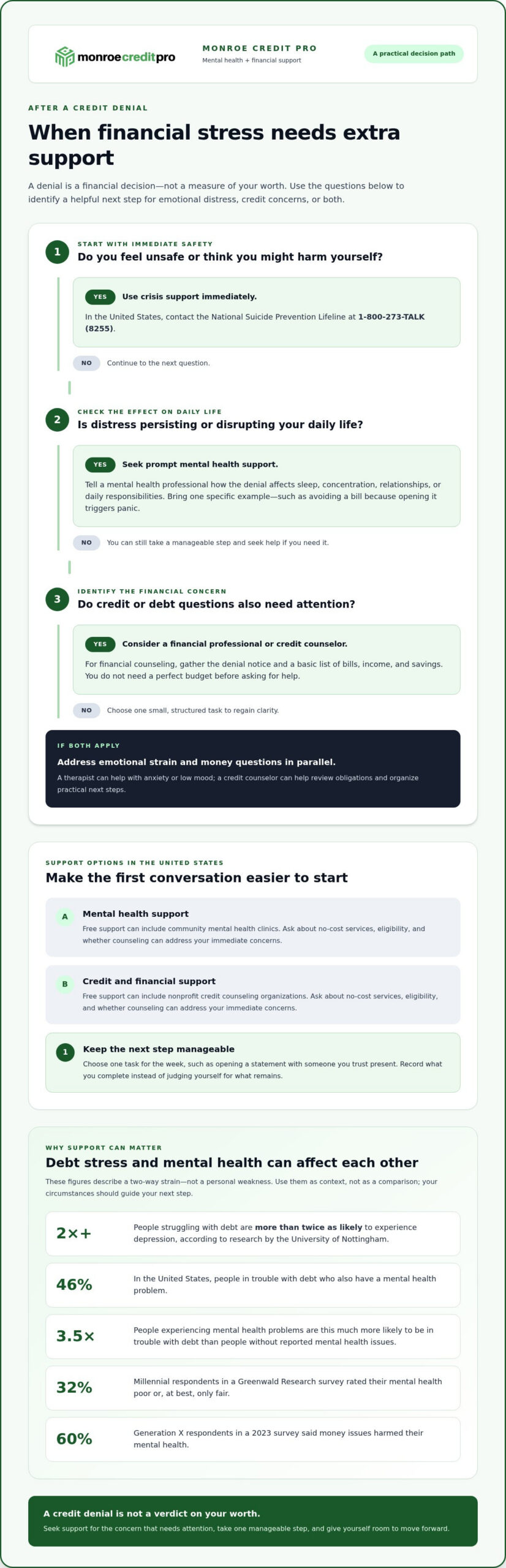
Credit denial can intensify distress, especially when debt already feels difficult to manage. People struggling with debt are more than twice as likely to experience depression, according to research by the University of Nottingham. That relationship matters: financial pressure can affect mood, while mental health problems can make everyday money tasks harder. Neither pattern means you’ve failed. It signals that support for both concerns may be useful.
In the United States, 46% of people in trouble with debt also have a mental health problem. People experiencing mental health problems are three and a half times more likely to be in trouble with debt than people without reported mental health issues. These figures describe a two-way strain, not a personal weakness. A counselor can help you address distress; a financial professional can help organize your next steps.
Age can shape how financial pressure feels, but it doesn’t determine what help you need. In a Greenwald Research survey, 32% of Millennial respondents rated their mental health poor or, at best, only fair. A 2023 survey found that 60% of Generation X respondents said money issues harmed their mental health. Use these findings as context, not a comparison. Your own symptoms and circumstances should guide your next step.
Free support in the United States can include community mental health clinics and nonprofit credit counseling organizations. Ask about no-cost services, eligibility, and whether counseling can address your immediate concerns. For a mental health crisis, contact the National Suicide Prevention Lifeline at 1-800-273-TALK (8255).
Make the first conversation specific. Tell a mental health professional how the denial has affected your sleep, concentration, relationships, or daily responsibilities. Bring one example, such as avoiding a bill because opening it triggers panic. For financial counseling, gather the denial notice and a basic list of bills, income, and savings. You don’t need a perfect budget before asking for help.
Keep both forms of support focused on manageable actions. A therapist can help you develop strategies for anxiety or low mood; a credit counselor can help you review obligations and create a practical plan. Choose one task for the week, such as opening a statement with someone you trust present. Record what you complete instead of judging yourself for what remains.
Seek prompt mental health support if distress persists or begins to disrupt daily life. If you feel unsafe or might harm yourself, use the crisis resource above immediately. For credit concerns, professional credit counseling can help clarify your financial picture. Addressing emotional strain and money questions in parallel gives each problem focused attention, without treating a credit denial as a measure of your worth.
Financial stress and relationship disagreements
Money pressure can affect both mood and conversations at home. In a late-2023 survey, 54% of U.S. adults with debt said debt stressed them. In the same period, 60% of U.S. respondents said financial stress had led to relationship disagreements. A payment due date, an unexpected expense, or a credit denial can become a flashpoint when partners feel blamed or unheard.
Anxiety and stress can show up in practical ways: trouble sleeping, racing thoughts, irritability, or difficulty concentrating on spending decisions. Anger may surface during a conversation about a missed payment, even when fear is underneath it. The National Institute of Mental Health estimates that 40 million Americans suffer from anxiety. If worry is disrupting daily routines, treat that impact as a reason to seek mental health support.
Debt-related distress can also affect how people manage money together. One partner might avoid checking an account while the other repeatedly asks about balances. That pattern can increase tension without resolving the underlying issue. Choose a calm time to discuss one specific concern, such as which bill needs attention first. Focus on the shared problem, not who is at fault.
Pause briefly before responding to a difficult money topic. Take a slow breath, name the concern, and agree on a time to return to the discussion. For example: “I’m worried about this payment. Can we review the due date and our options tonight?” A clear request gives both people something practical to address, instead of leaving the conversation stuck in accusation or silence.
Structure financial conversations. Set an agenda, such as reviewing current bills, identifying essential spending, and choosing one next action. Give each person time to explain what feels most urgent. If one person manages household finances, share the information in a simple format so both partners understand the same figures and priorities. A brief, scheduled check-in can keep every purchase or reminder from becoming a separate argument.
Depression and financial stress can reinforce each other, making routine tasks feel heavier. Don’t use a disagreement as proof that the relationship or your finances are beyond repair. Focus on a specific next step, such as writing down the payment date or deciding how to discuss a credit concern with a counselor. If questions about your credit are adding strain, credit counseling can provide a structured way to review the financial issue while keeping the conversation grounded in practical next steps.
3. Credit denial and financial avoidance
A credit denial can prompt avoidance: ignoring suspected collection calls, leaving bills unopened, or underestimating debt. Another warning sign is applying for a new credit card after maxing out an existing one, while assuming everyone faces the same circumstances. These responses may briefly ease discomfort, but they can hide details you need to make informed decisions.
Start with one manageable review. Open one bill, note its balance and due date, then decide what information you need next. If a call feels overwhelming, write down the caller’s name and your question before responding. A small, clear task turns vague worry into something specific to address.
What are alternatives to credit cards or loans for someone who was denied? Use available funds, a debit card, or cash for necessary purchases, and postpone nonessential spending. If you can’t pay a bill in full, ask the biller whether a payment arrangement is available.
What reasons can lenders give for denying a credit application? A lender may identify factors such as payment history, existing debt, income, or incomplete application information. Compare the stated reason with your records instead of treating the denial as a judgment of your character.
How can I get and understand the adverse action notice after a credit denial? Review the lender’s notice and contact the lender if you need another copy or clarification. Write down each reason, then match it to the relevant application detail or credit report entry.
How do I check my credit reports for errors after being denied credit? Obtain your reports from the credit reporting companies and compare account names, balances, payment details, and personal information. Mark entries that seem unfamiliar or inaccurate, and gather supporting records before disputing them.
How long should I wait before reapplying for credit after a denial? There’s no single waiting period that fits every denial. Consider reapplying after addressing the lender’s stated reasons, correcting any report errors, and reviewing whether the new application reflects your current finances.
Use the denial as a prompt to examine your finances, not avoid them. List open accounts, upcoming payments, and credit card balances in one place. If interest charges are adding pressure, note which balances accrue interest and what payment each requires. This list helps you see the situation clearly without applying for additional credit as an immediate response.
Review the situation in stages: read the notice, compare it with your reports, then choose one next action. Facing the facts can feel difficult, but a written record makes each decision more concrete and less driven by fear.
4. Self-compassion and shame reduction
A credit denial can trigger harsh conclusions: “I’m irresponsible” or “I’ll never qualify.” Treat those thoughts as reactions, not established facts. Replace a sweeping judgment with a specific statement: “This application was denied, and I can review the reasons.” Separating the event from your identity can make the next action easier to identify.
Self-compassion doesn’t mean ignoring a missed payment or avoiding responsibility. It means responding to a problem without adding insults. Instead of saying, “I ruined everything,” name what happened: “I missed a due date during a difficult month.” Then consider what would help now, such as recording the next payment date or reviewing the lender’s explanation.
Try a brief written exercise after a stressful credit decision. Note the situation, the negative thought, and one balanced response. If the thought is, “Everyone else manages money better,” write down what you actually know: you received a denial, but you don’t know other people’s full circumstances. Finish with one reachable action, such as organizing the notice or planning a conversation with someone you trust.
Shame can grow when people hide financial concerns. Choose one safe person and share only what’s needed for support. You might say, “I’m upset about this decision and need someone to sit with me while I read the notice.” This gives the other person a clear role without requiring you to disclose every account or explain your entire financial history.
Build a routine that protects your energy. Set aside a short period to review one financial task, then stop at the planned time. For example, read one statement, record the due date, and close the account page. A clear boundary can prevent an upsetting review from taking over the evening. If distress rises, pause and return to the task when you feel more settled.
Notice your actions, not just the outcome. You may not control a lender’s decision, but you can keep a record, ask a clear question, or dispute inaccurate information. Write down each completed step, even if it feels small. This record can remind you of your efforts when negative self-talk says you’re doing nothing.
Offer yourself the same fairness you’d give a friend facing a similar setback. You might tell them, “A denial is difficult, but it doesn’t define you. Let’s look at the next step.” Use that language with yourself, too. If self-blame continues to cause distress or disrupt daily life, share that pattern with a mental health professional. Support can help you work through the emotional impact while addressing practical concerns at a manageable pace.
5. What are healthy ways to cope emotionally after a credit application is denied?
Give yourself space before making another financial decision. Close the application page, step away from your phone, and take several slow breaths. Then name the feeling plainly: disappointment, fear, or frustration. Naming the emotion can help you choose what to do next instead of reacting with another application or an impulsive purchase.
Set a short reset routine for the first day. Drink water, eat a regular meal, and take a brief walk around your block. These actions don’t resolve the credit issue, but they create structure while emotions are high. Avoid repeatedly checking for a different decision; choose a specific time later to read the lender’s notice.
Keep the next step small and concrete. Write down one question raised by the denial, such as whether an account balance was reported accurately. Put the question beside the notice, then pause your review. This turns broad worry into a task you can handle later, without trying to solve every financial concern at once.
Protect your attention from repeated triggers. For example, silence nonessential credit notifications for the evening and avoid comparing your finances with someone else’s online posts. If a friend asks what happened, you can say, “My application was denied, and I’m reviewing the reasons before deciding what comes next.” That boundary tells the truth without inviting unwanted advice.
Choose one trusted person for practical support. Ask them to sit with you while you read the notice or check in after you’ve taken a walk. Be specific about what would help: listening, company, or help writing down questions. If you feel overwhelmed, pause the conversation and return to it at a planned time.
Notice whether distress is affecting your daily routines. Record changes in sleep, concentration, appetite, or work, along with when they occur. Share that record with a mental health professional if these changes persist or interfere with ordinary responsibilities. Break a difficult financial task into one action per session, such as opening a statement today and listing questions tomorrow.
Use a steady sequence: settle your immediate emotions, understand the denial, then choose a practical response. Credit counseling can help organize financial questions and identify a manageable next step. Explore credit counseling support as you build a clearer plan for addressing credit concerns.
Financial strain is common, but that does not make your reaction unimportant: almost half of Americans say money negatively affects their mental health, causing issues such as anxiety, stress, worrisome thoughts, loss of sleep, or depression. 1 in 5 U.S. households say credit card debt affects their health. If debt-related concerns feel hard to face, check gently for signs of debt denial: underestimating debt, avoiding suspected collection calls, leaving bills unopened, opening another card after maxing out an old one, and believing everyone is in the same situation. Treat noticing any of these as a prompt to seek support, not as a reason to blame yourself.
When you feel ready to plan, make saving concrete without demanding a large change. Decide how much to save, then schedule a recurring transfer to a savings account. Choose an amount that fits your circumstances and revisit the plan if it’s difficult to maintain. A repeatable action can give you a constructive focus as you work through the concerns raised by the denial; it doesn’t need to solve everything immediately. If distress remains difficult to manage, talk with someone you trust or a mental health professional.
Monroe Credit Pro: Credit Restoration
Monroe Credit Pro offers Credit Restoration through structured monthly dispute cycles. If a denial has left you unsure what to do next, Credit Counseling can help you organize questions and consider practical steps. Professional Credit Repair and Credit Correction can address inaccurate, outdated, or unverifiable information on your credit reports.
Start by gathering the lender’s notice and relevant credit report details. These documents can help you explain your concern and identify the support that fits your situation. Credit-related guidance can complement, but does not replace, mental health care when emotional distress affects daily life.
For support with credit concerns, contact Monroe Credit Pro or visit monroecreditpro.com.
Take the Next Step at Your Own Pace
A credit denial can feel like a stopping point, but it can also prompt a deliberate reset. Choose one next action that supports both your emotional well-being and your financial clarity. If you need help regaining direction and motivation beyond immediate finances, exploring life and executive coaching through charliewcoaching.com can be a constructive way to reframe your goals. Overcoming credit denial depression begins with treating progress as a process, not a test of personal worth. Give yourself room to make decisions steadily, based on what you learn and the support you need.
If credit concerns remain difficult to sort through, Monroe Credit Pro offers Credit Restoration, Professional Credit Repair, and Credit Correction. These services can support a focused review of credit issues while you continue caring for your mental health. The next step doesn’t need to solve everything at once. It only needs to move you toward a clearer plan.
Explore credit support with Monroe Credit Pro and choose a practical next step. You can move forward with patience, dignity, and renewed confidence.
Frequently Asked Questions
How can credit denial affect mental health and cause depression?
A denial can trigger worry about future expenses, especially if you were counting on credit for a planned purchase. Replaying the decision or treating it as proof of personal failure may deepen distress. Notice whether the reaction is disrupting routines such as sleep, work, or caring for family. Naming the specific concern, such as covering a car repair, can help separate the immediate problem from broader fears.
When should I seek professional help for depression after financial stress?
Seek professional support when low mood, anxiety, or loss of interest persists or interferes with daily responsibilities. A licensed mental health professional can help assess symptoms and discuss appropriate support. If you may harm yourself or feel unsafe, contact the National Suicide Prevention Lifeline at 1-800-273-TALK (8255). You can also tell someone you trust what’s happening and ask them to stay with you while you seek help.
What steps can improve a credit score after a credit application denial?
Start by reviewing the lender’s stated reasons, then focus on factors you can address. Check account details for errors, dispute inaccurate information, and keep current bills paid on time to avoid late fees. Create a debt payment plan and use a spending log to track where money goes. Avoid responding to a denial by opening more credit before understanding the underlying issue.