



Feeling hopeless about your credit score doesn’t mean you’re out of options. One missed payment is unlikely to have a significantly detrimental impact, but five or six missed payments can have lasting consequences for your score. Outside support may make sense when money worries keep returning or start affecting your sleep, relationships, or ability to function.
It’s understandable to feel overwhelmed when financial pressure, missed payments, and adverse information on your credit report seem to build on one another. These setbacks aren’t a measure of your worth. Understanding what’s affecting your score can help you decide where to focus next.
This article explains how money stress and payment history can affect credit, what adverse information may mean for your finances, and when practical or emotional support could help. You’ll also learn how reviewing your credit information and taking manageable steps can make the situation feel more organized, even when progress takes time.
Key Takeaways
- Money stress and credit difficulties can reinforce each other, so breaking the cycle starts with one manageable action, such as reviewing a bill and its balance.
- Check your credit reports for inaccurate information; correcting errors can support score improvement.
- Organize debts by balance, minimum payment, and interest rate to identify a practical repayment priority.
- Payment history and revolving credit utilization both matter; consistent on-time payments and lower balances can help strengthen your credit profile.
- Consider outside support when financial distress repeatedly disrupts sleep, relationships, or daily functioning.
Late payments, debt, and worsening credit scores
Late payments can add to debt and financial stress, while a focused repayment plan can help you regain a sense of control. There is no universal credit score required for a car loan, mortgage, or credit card. Lenders use different scoring systems and their own risk criteria.
Late Payments and Worsening Credit Scores
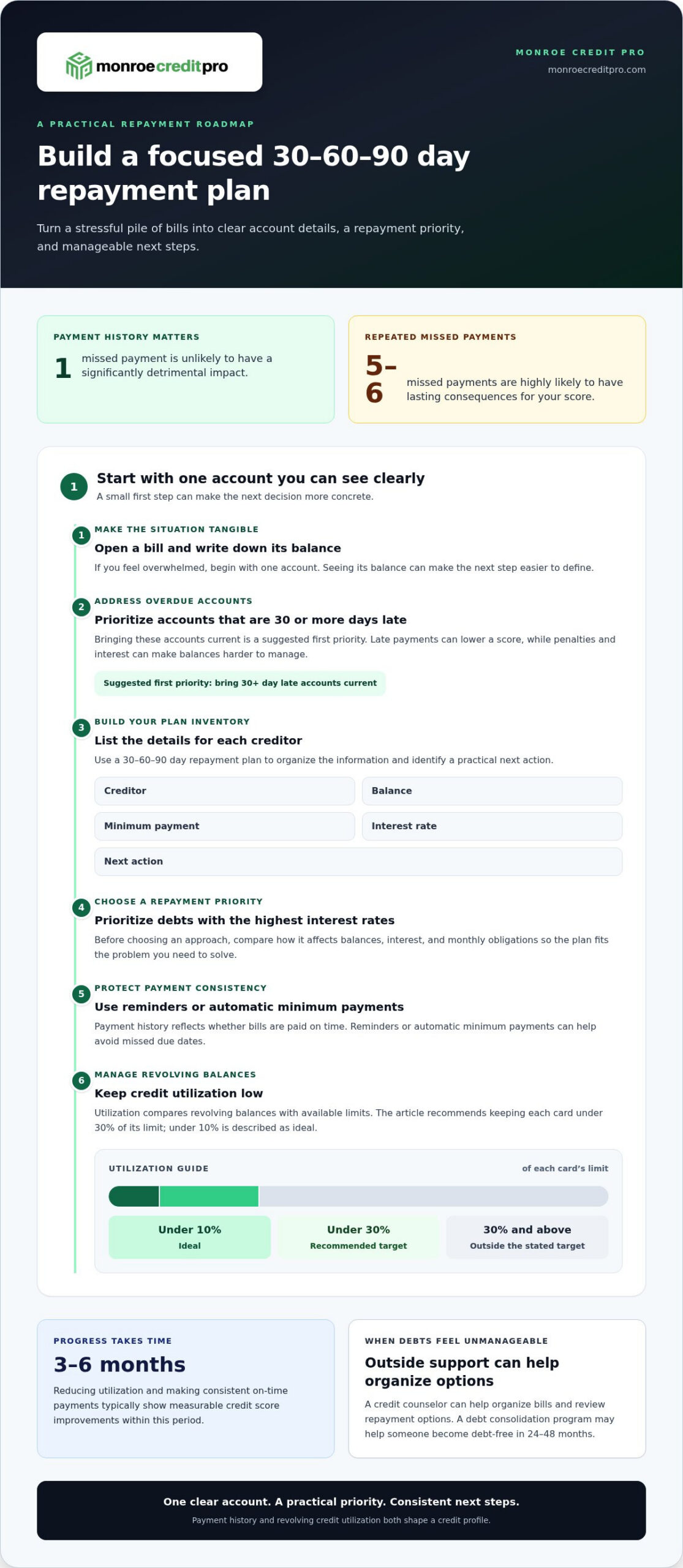
Late payments can lower a credit score, while added penalties and interest can make a balance harder to manage. That cycle matters because worsening credit can add pressure just as someone is trying to regain financial stability. One missed payment is unlikely to have a significantly detrimental impact, but five or six missed payments are highly likely to have lasting consequences. Bringing accounts 30 or more days late current is a suggested first priority.
Debt and mental health can affect each other. People experiencing mental health problems may face money-management difficulties, and financial strain can make those difficulties harder to address. If you’re feeling hopeless about your credit score, start with one manageable step: open a bill and write down its balance. Seeing one account clearly can make your next decision more concrete.
Debt-related worry is not simply a matter of willpower. In 2020, 43% of indebted adults said debt negatively affected their sense of direction. In 2020, 13% of Americans who lost sleep because of financial constraints said credit card debt was the sole cause. In 2019, 20% of Americans said debt made them feel physically ill at least once a month.
Payment History and Credit Utilization
Payment history reflects whether bills are paid on time, while credit utilization compares revolving balances with available limits. Both can shape a credit score, so paying consistently and reducing credit card balances can support a stronger profile. A recommended target is to keep utilization under 30% of each card’s limit, with under 10% described as ideal.
Build a 30-60-90 day repayment plan listing each creditor, minimum payment, interest rate, balance, and next action. Prioritize debts with the highest interest rates, and use payment reminders or automatic minimum payments to help avoid missed due dates. Reducing utilization and making consistent on-time payments typically show measurable credit score improvements within 3-6 months.
Credit counseling can help when debts feel unmanageable alone. A counselor can help organize bills and review repayment options. A debt consolidation program may help someone become debt-free in 24-48 months. Before choosing a repayment approach, compare its effect on balances, interest, and monthly obligations so the plan fits the problem you need to solve.
Stress, anxiety, shame, and hopelessness
A low credit score can feel like a barrier to housing, borrowing, or other goals. When progress seems blocked, stress can deepen into anxiety or depression. In 2020, 31% of American adults reported that financial anxiety led to feelings of depression on a monthly basis. That finding highlights how money pressure can affect emotional well-being, not just household decisions. A credit score is information about credit history, not a measure of personal worth.
Shame can make it harder to face balances, open statements, or ask for help. In a 2020 study, 46% of people with poor credit said they felt ashamed about it. Debt can also weaken optimism: in 2019, 48% of adults in debt said it negatively affected their optimism. Those feelings may lead someone to avoid financial details, but avoidance can leave uncertainty in place. A practical first step is to name the main concern, such as a missed payment or a balance that feels unmanageable.
Health costs can add a distinct source of financial anxiety. In 2020, 79% of Americans cited feeling anxious about the rising cost of healthcare. When medical expenses compete with rent, groceries, or debt payments, a person may feel forced to choose between immediate needs. Financial strain can also lead people to neglect treatment, prescriptions, or health insurance costs, delaying care. Write down the expense causing the greatest pressure, then identify whether it is urgent, recurring, or connected to a payment deadline.
Inflation-related anxiety often grows when everyday costs rise while income and available funds feel constrained. In 2020, close to two-thirds of adults said money was a significant source of stress in their lives. That broad pressure can affect managing bills and keeping perspective on longer-term goals. Separate essential expenses from flexible spending, then review which bills or subscriptions might be negotiated or reduced. This doesn’t resolve every financial challenge, but it makes the pressure easier to describe and address.
Feeling hopeless about your credit score can make ordinary decisions feel permanent. If worry repeatedly disrupts sleep, relationships, or your ability to function, seek support rather than carrying it alone. Tell someone you trust about the specific financial issue you’re facing. A therapist who understands financial trauma may help address distress, while a credit counselor can help organize money concerns. These forms of support meet different needs: emotional strain and financial planning. Choose one manageable next step, such as opening a statement or writing down a question.
Emotional effects of adverse credit information
Adverse information can feel like a judgment, even though a credit report records financial history rather than personal character. Poor credit combined with debt may leave someone feeling helpless or hopeless, with sleep problems, difficulty focusing, and physical stress. In 2020, 82% of adults reported experiencing stress because of credit card debt. That pressure can make routine tasks, such as reviewing a statement or planning a payment, feel harder to face.
Credit card use can create emotional strain when a purchase brings short-term relief but adds to a balance that already feels difficult to manage. For example, someone worried about unexpected expenses might use a card for everyday needs, then feel more anxious when the bill arrives. That cycle isn’t proof of irresponsibility. It’s a signal to notice the trigger, identify the purchase, and consider the practical need or emotion behind it.
Poor credit can also affect confidence over time. Embarrassment and lower self-worth may make a person avoid conversations about money or assume future goals are out of reach. In 2020, 30% of individuals with poor credit said they felt angry because of it, while 16% said their score made them feel confused. Those reactions can make it harder to separate the facts on a report from fears about what they mean.
Stress can influence spending decisions. Someone feeling discouraged might make an unplanned purchase for comfort, then regret it when the charge appears. Try pausing between the urge and the transaction: write down the item, wait until the next day, and review whether it fits your essential expenses. For a credit card purchase, note its expected effect on your balance before buying. This creates a moment to reconsider without treating one purchase as a personal failure.
Persistent stress can affect the body as well as mood. Long-term elevation of stress hormones such as cortisol can contribute to headaches, digestive problems, high blood pressure, heart disease, stroke risk, and weakened immune function. These possible effects are another reason to take repeated distress seriously. If credit worries disrupt your sleep or concentration, tell someone you trust and identify one immediate concern to address.
Separate emotional strain from credit report problems. Review adverse information, note anything that appears inaccurate, and gather records related to the item. Consumers can dispute errors on their credit reports. A structured review can turn a vague fear into a specific question, such as whether an account balance or payment status is recorded correctly. Addressing report errors and seeking help for emotional distress are distinct steps, and both can help you begin to regain a sense of control.
Long-term effects of missed payments
Missed payments can leave consequences that continue after an account is brought current. Five or six missed payments are highly likely to have lasting effects on a credit score. The effect can extend beyond the number itself: a lower score may influence how lenders assess borrowing applications and the interest rates available. A person applying for a loan may therefore face different terms after a period of missed payments. Understanding these possible effects helps separate the immediate task of catching up from the longer process of rebuilding credit.
Poor credit can affect access to major financial goals. In the United States, it can make getting a loan harder, contribute to higher interest rates on available credit, and lead to rejection for rental housing or employment opportunities. For example, someone looking for an apartment may find that credit information is part of the application decision. That can make a missed payment feel connected to housing security, not just a number. The practical impact depends on the decision and the lender’s or organization’s criteria.
Credit recovery takes sustained attention. Significant score recovery usually takes 12-24 months of disciplined behavior and resolved negative items. That timeframe is not a reason to delay; it shows why a stable routine matters. Start by identifying which accounts remain past due, then focus on bringing them current and keeping future payments on schedule. If a negative item appears inaccurate, reviewing the report and disputing errors can address a separate issue from repayment. Each step targets a different part of the credit picture.
Separate short-term access problems from long-term rebuilding. A loan application may depend on a lender’s own risk criteria, while a rental decision concerns housing access. A credit score can be one factor, but lenders may use different agencies and interpret scores differently. One application outcome therefore doesn’t show how every lender or landlord will respond. Review the account history and the specific decision before choosing what to do next.
Review each account to make your next move manageable. List missed payments, current account status, and any action needed. Then prioritize the overdue account that needs attention most, while protecting your ability to meet essential expenses. If several accounts make planning difficult, credit counseling can help you organize bills and repayment options. Progress may feel gradual, but resolving negative items and maintaining disciplined payment habits can support rebuilding over time.
How do payment history and credit utilization affect credit scores?
Payment history records whether you pay credit accounts on time. Credit utilization compares revolving balances with available credit limits. Both can influence your score, making them practical areas to manage. One missed payment is unlikely to have a significantly detrimental impact, but repeated missed payments can make rebuilding harder. Set reminders or automatic payments for at least the minimum due to support consistent payment habits.
Credit utilization changes as card balances and limits change. If a card has a high balance compared with its limit, utilization rises; paying down that balance can lower the ratio. Guidance recommends keeping revolving utilization under 30% of each card’s limit, with under 10% described as ideal. For example, if a card is close to its limit, paying it down before adding new charges can reduce the reported balance. Avoid treating the target as a reason to take on new debt.
Timing and consistency matter. Set automatic payments for at least the minimum due, then add calendar reminders before payment dates. If automatic payments could strain your checking account, use reminders instead and review due dates alongside other essential bills. Paying a credit card several times throughout the month is another option for managing its balance. Choose a routine you can maintain, and check that each payment has posted.
Reducing utilization and making consistent on-time payments typically show measurable credit score improvements within 3-6 months. One illustrative example describes a person improving their score by more than 80 points in six months after lowering utilization and bringing a late payment current. That example shows how several actions can work together, not what every person should expect. Track balances and payment dates over time to see whether your own habits are moving in the right direction.
Start with a clear snapshot: write down each card’s limit, current balance, minimum payment, and due date. Then choose one action, such as lowering the highest utilization balance or setting a payment reminder. If reviewing your accounts feels difficult, get support reviewing your credit profile and identifying practical next steps. A steady record of on-time payments and controlled balances can support credit rebuilding without requiring a complicated plan.
Monroe Credit Pro: Credit Restoration
Monroe Credit Pro offers Credit Restoration for people working to rebuild their credit profile. If missed payments or adverse information leave you unsure where to begin, a Credit Report Audit can help you understand your reports, while Credit Correction addresses inaccurate, outdated, or unverifiable information. Credit Counseling can help you better understand your financial situation and consider practical next steps.
Consider professional support when reviewing accounts, identifying errors, or organizing a plan feels difficult to manage alone. The goal is to understand your credit picture and choose practical actions, not judge past setbacks. To learn more about support for your credit goals, visit monroecreditpro.com.
Move Forward With a Plan You Can Maintain
If you’re feeling hopeless about your credit score, focus on one manageable next step rather than trying to solve every financial concern at once. Start with a clear question: Do you need help understanding your credit information, correcting an issue, or planning how to move forward? Naming what you need can make it easier to find relevant support.
Monroe Credit Pro offers Credit Restoration, Professional Credit Repair, and Credit Correction to support people addressing credit challenges. A useful starting point depends on what you want to work on, such as reviewing a report or addressing inaccurate information. Past financial difficulties aren’t a personal failure. Use them as a reason to create a structured plan for what comes next.
If you’re ready to discuss support for your credit goals, contact Monroe Credit Pro. Take the next step at a pace you can sustain. A clearer plan can help you keep moving forward.
Frequently Asked Questions
When Does Outside Support Make Sense?
Outside support can help when financial problems are difficult to organize or disrupt daily life. If you’re unsure which account needs attention first, credit counseling can help you structure your financial priorities. If worry affects sleep, relationships, or your ability to function, emotional support may also be appropriate. These forms of support meet different needs, and seeking one doesn’t prevent you from seeking the other.
Why are credit ratings confusing?
Credit scores can differ because credit bureaus and scoring systems don’t always calculate them the same way. Lenders may also choose different agencies, interpret scores differently, and apply their own risk criteria. For example, two lenders reviewing the same person might reach different decisions because they use separate criteria. Treat a score as one part of your financial picture, not a universal verdict on every application.
Can a low credit score be improved, and how long does it take?
Yes, a low score can improve as credit information is corrected and positive payment habits build. Monroe Credit Pro says clients may see results within 30-60 days, while the full process can take 3-6 months or longer, depending on the items challenged. Credit bureaus have 30 days to investigate disputes, and reports typically update every 30-45 days. These are different stages, so a dispute investigation and visible report changes may not happen together.
What steps can improve a credit score fastest?
Address report errors and lower high revolving balances while keeping payments on time. Guidance recommends utilization under 30% of each card’s limit, with under 10% described as ideal. Correcting credit report errors can raise scores within 30-60 days. Review each report for inaccurate information, dispute errors, and avoid adding charges that push balances higher. These actions target specific score factors rather than relying on a single quick fix.
How long do negative marks like late payments, collections, and bankruptcy stay on credit reports?
Late payments, collections, and bankruptcy don’t all share the same reporting duration. Each type of information follows its own reporting timeline, and the relevant dates and account details matter. Review the entry’s status and history on your reports, then compare the information across bureaus. If an item is inaccurate, outdated, or unverifiable, you can dispute it. Accurate, verified negative information cannot be removed through a dispute.
How can I build credit with a secured card or credit-builder loan?
After paying off debts, you can use a secured card to build credit gradually. A credit-builder loan is another option; one example saw a score rise steadily after six months as the tradelines matured.