



Bad credit is a financial issue to address together, not a verdict on your marriage. To learn how to talk to a spouse about bad credit, choose a calm, private time, explain what you owe and what contributed to the problem, then agree on a practical next step. In the United States, credit scores run from 300 to 850 points, according to the Consumer Financial Protection Bureau; marriage doesn’t combine spouses’ credit scores.
It’s understandable to feel anxious about sharing debt or worry the conversation could turn into blame. A clear, respectful discussion can help you face the facts as a team and focus on what you can do next.
This guide explains how to prepare, disclose debt, and discuss its causes and possible effects. You’ll also learn how to review financial information together, build a shared plan, and find appropriate support when you need guidance.
Key Takeaways
- Set a quiet time to talk, and approach the discussion as a shared financial review rather than a blame session.
- Gather credit reports, statements, and bills so you can explain balances, causes, and priorities clearly.
- Disclose debt directly, describe its potential effects, and leave room for your spouse to respond.
- Build a joint plan around spending, payments, and regular progress check-ins.
- Consider credit counseling or credit restoration support when you need help reviewing your credit and identifying next steps.
1. Choosing a calm time for a money conversation
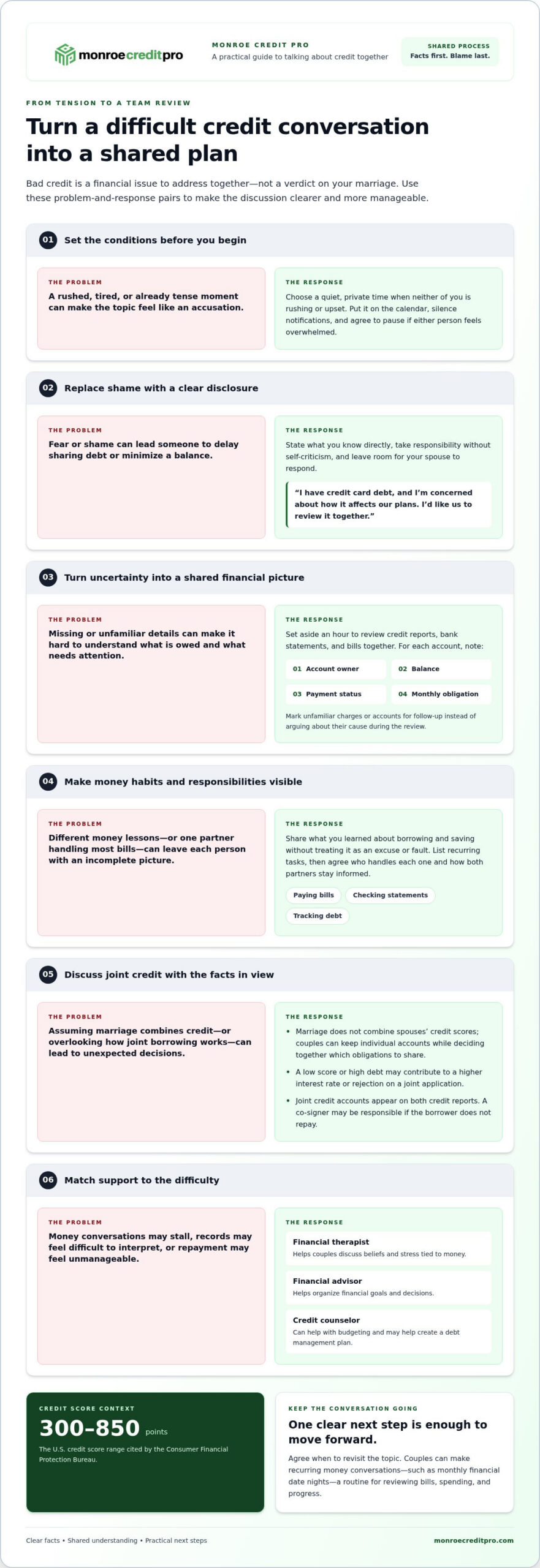
Choose a quiet time when neither of you is rushing, exhausted, or already upset. A private conversation after dinner may work better than bringing up debt during an argument or while paying bills. Put the discussion on your calendars so it feels intentional, not like an accusation sprung without warning. Say, “I want us to review my credit and decide what to do next. Can we set aside time tomorrow evening?” This direct opening explains the subject and gives your spouse time to prepare.
Keep the setting simple: silence notifications, avoid interruptions, and agree to pause if either of you feels overwhelmed. Don’t begin just before work, during a family gathering, or after an unexpected expense has created tension. If the first conversation needs to be brief, share the main concern and schedule a longer follow-up. A planned discussion lets you cover the details without forcing either partner to respond before they’re ready.
Make conversations about money part of your relationship before marriage, rather than waiting for a credit problem to surface. Discuss existing debts, spending habits, financial goals, and what you each learned about managing money. Before combining household plans, for example, compare how you approach saving and borrowing. These conversations can reveal different expectations early and make shared decisions easier.
Fear and shame can lead someone to delay disclosure or minimize a balance. Replace self-criticism with a specific, factual statement: “I have credit card debt, and I’m concerned about how it affects our plans. I’d like us to review it together.” This takes responsibility without treating a credit score as a measure of character. If you’re unsure how to talk to your spouse about bad credit, start with what you know and identify what you still need to review.
Set a regular routine after the first discussion. Couples can schedule recurring money conversations, such as monthly financial date nights, to review bills, spending, and progress. Keep the first meeting focused on one goal, such as sharing the debt picture, rather than trying to solve every financial issue at once. End by agreeing on the next step and when you’ll revisit it. A calm time, a clear purpose, and a planned follow-up can turn a difficult conversation into a shared process.
Before you begin, make sure you both have enough attention for the conversation and aren’t trying to manage another pressing task at the same time. If either person feels too tense to listen or speak clearly, agree to return to the subject when the pressure has eased. Set aside competing demands and give each person room to explain their concerns without interruption. If the discussion becomes strained, take a pause to settle, not to abandon the subject. When you resume, return to the shared purpose: understanding the situation and deciding what to review next. Choosing a calm moment isn’t about avoiding difficult details. It gives you a better chance to address them thoughtfully, together.
2. Getting help from a financial therapist, financial advisor, or credit counselor
Consider professional support when money conversations stall or records feel difficult to interpret. A financial therapist can help couples discuss the beliefs and stress tied to money. A financial advisor can help organize financial goals and decisions. A credit counselor can help with budgeting and may help create a debt management plan when repayment feels unmanageable or bankruptcy is a concern.
Start with a shared review, not assumptions. Set aside an hour to look at each spouse’s credit reports, bank statements, and bills. Credit reports can show debts such as credit card balances and loans, helping you identify what you owe. Note each account’s owner, balance, payment status, and monthly obligation. If a charge or account is unfamiliar, mark it for follow-up rather than arguing about its cause during the review.
Financial habits often have a history. One spouse may have learned to save carefully after growing up with uncertainty, while the other may see borrowing as a normal way to manage expenses. Share those experiences without treating them as excuses or faults. For example, explain what your family taught you about debt, then discuss how that belief affects your spending or saving decisions today.
Unequal responsibilities can add strain. If one partner handles bills while the other manages savings, each may have an incomplete view of household finances. List recurring tasks, such as paying bills, checking statements, and tracking debt. Then decide who will handle each task and how the other partner will stay informed. A shared review can uncover missed payments or growing balances before they become a bigger source of conflict.
Should spouses keep finances separate or apply for credit jointly if one has bad credit? Marriage doesn’t combine credit scores, so spouses can keep individual accounts while deciding together which obligations to share. Joint applications may be affected by one partner’s low score or high debt, potentially leading to higher interest rates or rejection.
How long does it take to rebuild a bad credit score? There’s no single timeline; progress depends on your credit history and the steps you take. Consistent on-time payments and lower card balances can support improvement over time.
How does bad credit affect joint credit cards, loans, mortgages, and interest rates? Joint credit accounts appear on both spouses’ credit reports, and a co-signer may be responsible if the borrower doesn’t repay. For a joint home loan, one partner’s low score or high debt can contribute to a higher rate or rejection.
Choose professional help based on the problem: emotional patterns, overall planning, or debt and credit review. If you want structured guidance with credit questions, credit counseling support can help you assess the next steps.
3. Disclosing debt to a spouse
Share the full picture, not only the balance that feels easiest to explain. Before the conversation, list each debt, its current balance, minimum payment, payment status, and account holder. Include credit cards, personal loans, medical bills, and any joint accounts. If you’re still gathering details, say what you know and identify what you’ll review together. Clear disclosure gives both spouses the same starting point for decisions.
Start with a direct statement that takes responsibility without turning the conversation into self-punishment. For example: “I need to tell you about debt I haven’t shared. I’m concerned about it, and I want us to review the details together.” Then explain when it began, what contributed to it, and what you’ve done so far. Don’t minimize the amount or promise a payoff plan before you’ve reviewed the numbers.
What financial and legal risks come with hiding debt or bad credit from a spouse? Hidden debt can damage trust and leave a partner unprepared for shared financial decisions. Marriage doesn’t combine spouses’ credit scores, but joint credit accounts appear on both credit reports, and a co-signer may be responsible if the borrower fails to repay.
Use records to distinguish individual accounts from shared obligations. For each account, note whether one spouse applied alone, both applied jointly, or one co-signed. A joint credit card can affect both reports, while individual credit scores remain separate after marriage. These distinctions help you discuss actual responsibilities instead of assuming every debt belongs to both partners.
How can you talk about bad credit without blame or conflict? Describe the situation with specific facts, use “I” statements, and invite your spouse to ask questions. Try, “I missed payments during a period when my expenses exceeded my income,” rather than assigning fault or hiding the missed payments.
Expect your spouse to need time to absorb the information. Pause if the discussion gets heated, then agree on a time to continue reviewing the records. Some people experience hidden debt as deeply hurtful, so acknowledge the impact without demanding immediate forgiveness. You might say, “I understand why this affects your trust. I’ll answer your questions honestly, and we can review each account together.”
Keep the first disclosure focused on facts and openness, not a complete solution. Bring account statements, clearly identify anything you’re unsure about, and agree on one next step, such as checking whether a payment is overdue. If you previously concealed a balance, say so directly and explain what will change, such as sharing statements each month. Consistent follow-through can help rebuild trust while you address the debt.
4. How do I explain the causes and effects of my bad credit?
Explain the specific events behind your score, then connect them to practical consequences. Bring your credit report and point to relevant accounts, balances, or payment history. Credit scores in the United States run from 300 to 850 points, according to the Consumer Financial Protection Bureau. That range provides context, but the score alone doesn’t explain what happened. Show your spouse the account details that help explain the situation.
A limited credit history can contribute to a low score, even without missed payments. Someone who has never used a credit card or loan may have little payment history for scoring models to assess. Explain the distinction clearly: “I haven’t borrowed before, so my report has limited information.” That’s different from saying you missed payments. Review the report together to identify whether the issue is limited history, overdue accounts, or another factor.
High card balances can affect credit utilization, which compares what you owe with your available credit. Explain whether balances rose after a change in income or increased household expenses. High balances can also make payments harder to manage. If a payment was late or missed, identify the account and circumstances, then describe what you’re doing to avoid another missed due date.
Describe possible effects without predicting an outcome. A low score can make future loans harder to obtain, especially loans with low interest rates. If you and your spouse apply jointly for a home loan, one partner’s low score or high debt may lead to a higher interest rate or rejection. Explain how those possibilities could affect a shared goal, such as buying a home.
Clarify which accounts could involve your spouse. Individual credit scores remain separate after marriage, but joint credit accounts appear on both spouses’ credit reports. Someone who co-signs a loan may be responsible for payment if the borrower fails to repay. Distinguish individual accounts from joint debts and co-signed loans. Use the account agreement and credit report to explain which obligations connect you both.
Keep your explanation factual and accountable. Try: “My card balance increased when my expenses rose, and I didn’t keep up with payments. I want us to review the balance and plan how I’ll manage it.” This explains a cause without blaming your spouse or minimizing your choices. If the cause is an error or unfamiliar account, identify the entry and make reviewing it the next step.
Close by naming one immediate action and one shared concern. For example, agree to examine the account history, list payment due dates, or discuss how debt may affect a joint mortgage application. Separating the cause, current balance, and possible effect helps your spouse understand the full picture. It also gives both of you a clear basis for deciding what to address first.
5. How can couples make a plan to improve bad credit together?
Turn the discussion into a written plan with shared goals and individual responsibilities. Start by listing each spouse’s credit accounts, balances, payment dates, and any errors to review. Check individual FICO® Scores and credit reports monthly or at least quarterly. Regular reviews help you notice changes, confirm payments are being made, and discuss concerns before they disrupt your plan.
Build your budget around actual income, essential expenses, minimum payments, and available funds for debt reduction. Choose a payoff strategy you can follow, then record which account receives extra payments and who makes each payment. Debt consolidation may be one option to consider alongside budgeting and a payoff strategy. Compare how a change would affect your payment obligations before making it, and keep the plan manageable for both partners.
Protect payment history with clear routines. Agree who pays each bill, who checks account balances, and who confirms payments were processed. Set reminders or use a shared calendar to track due dates. Keeping new card balances low and paying on time can improve a spouse’s credit score over time. Avoid adding new spending to a card simply because its available credit has increased.
Discuss account access before adding a spouse as an authorized user. The primary cardholder’s positive credit record may help the authorized user’s score, but both partners should understand the account’s balance and payment habits. Agree on whether the authorized user will make purchases, how those purchases will be tracked, and what happens if the balance starts growing. Keep the arrangement transparent and aligned with your household plan.
Divide household financial responsibilities so neither spouse has to guess about progress. One partner might pay recurring bills while the other balances accounts and tracks savings and debt reduction. Review statements together and update the plan when income, expenses, or balances change. Regular financial check-ins give you a set time to recognize progress, raise concerns, and adjust responsibilities without reopening the entire conversation.
Make the plan specific enough to guide the next action. Write down the payment tasks, the account each task applies to, and when you’ll review progress again. If you need help understanding credit issues or organizing a repair strategy, explore credit counseling support as a next step. Use the guidance to clarify your options and keep decisions aligned with your shared financial goals.
Keep budgeting, a payoff strategy, or debt consolidation coordinated within your shared debt plan. Regular financial check-ins can help both partners track progress and discuss concerns as they arise.
Partners can divide responsibility for paying bills, balancing accounts, reviewing statements, and tracking savings and debt progress.
Monroe Credit Pro: Credit Restoration
Monroe Credit Pro offers Credit Restoration for people ready to address credit concerns with structured support. If you and your spouse have reviewed your reports but need help understanding potential errors or organizing next steps, Credit Correction and a Credit Report Audit can support that review. Credit Counseling can also help you approach your finances with a clearer plan.
Consider professional support when account details are difficult to interpret, you’re unsure what to address first, or credit issues are slowing progress toward shared goals. Bring your questions and the information you’ve gathered so the discussion can focus on your situation and practical next steps.
To discuss support for your credit situation, contact Monroe Credit Pro or visit monroecreditpro.com.
Make the Next Step a Shared Decision
The first conversation doesn’t have to resolve every financial concern. Let it open a more collaborative way to make decisions, where both partners can ask questions, set priorities, and revisit plans without treating setbacks as personal failures. Learning how to talk to your spouse about bad credit can help you build shared responsibility, even when the subject feels difficult.
If you want structured help reviewing credit concerns, Monroe Credit Pro offers Credit Restoration, Professional Credit Repair, and Credit Correction. These services can help you understand your credit more clearly and decide what to address next.
Explore credit support with Monroe Credit Pro and take the next step at a pace that works for you. Each honest conversation can make room for a steadier financial path together.
Frequently Asked Questions
How should I tell my spouse I have bad credit?
Tell your spouse plainly and connect the disclosure to a shared decision or upcoming financial goal. For example, if you’re considering a lease or major purchase together, explain that your credit may affect the application and that you want to plan transparently. Bring a brief written outline of what you understand so far, and distinguish confirmed details from questions you still need to resolve. This keeps the conversation grounded and gives you both a clear place to begin.
What should couples discuss about credit scores and credit history?
Discuss what each person’s credit history shows and which financial goals could make that history relevant. Compare account types, payment patterns, borrowing experience, and past changes that shaped current habits. Ask whether either partner has concerns about applying jointly, co-signing, or taking on new credit. Agree on what progress means to you, such as resolving report inaccuracies or maintaining a more consistent payment routine, then revisit that goal during future financial check-ins.