



Credit rebuilding can show progress within 30 to 90 days, while significant improvement may take a few years. These credit score rebuilding tips focus on steady habits that can support progress over time. A late payment can remain on a U.S. credit report for seven years, according to the Federal Trade Commission, but its impact can become less significant as newer positive payment history is added.
A setback can feel permanent, especially when your score doesn’t improve as quickly as you hoped. Rebuilding takes time: consistent on-time payments and lower card balances can support progress, even while older negative information remains on your report.
Learn what affects the rebuilding timeline, how long negative information may remain on your report, and why credit utilization and new applications matter. You’ll also find practical steps for reviewing your credit information, prioritizing payments, and making thoughtful decisions about new credit. Focus on what you can control, then allow time for account updates to appear and their effects to register.
Key Takeaways
- Build a consistent payment record, and learn how rent and utility payment information may factor into credit history.
- Review your credit reports for errors and understand how the type of negative information affects how long it remains.
- Lower card balances strategically to manage utilization, a factor that can influence your credit profile.
- Be selective about new applications, and consider credit restoration support when report issues make rebuilding harder to manage.
How Long Does It Take to Rebuild a Credit Score?
Consistent on-time payments and lower card balances may show improvement in 30 to 90 days. More substantial rebuilding can take a few years because newer positive activity must build alongside older credit history. A payment more than 30 days late can remain on a U.S. credit report for seven years, according to the Federal Trade Commission.
Are credit-builder loans worth it, and what do they cost? They may help establish payment history through scheduled repayments, but the cost depends on the lender’s terms. Before committing, review the repayment schedule and confirm whether payments are reported to credit bureaus.
What steps help rebuild a credit score fastest? Pay every account by its due date, bring overdue accounts current, and reduce high card balances. Those actions address payment history and credit utilization, two influential scoring factors.
How can you avoid credit repair scams and illegal promises? Watch for pressure to pay upfront, promises to remove accurate information, and guarantees of a specific score increase. Review claims carefully before sharing personal or payment information.
- Protect payment history. Set reminders or automatic payments for bills, then confirm each payment posts. If you can’t pay a card’s full balance, make at least the minimum payment by its due date. A longer record of positive payments gives lenders more information about your borrowing habits.
- Use payment accounts that build credit. Paying cash or using a debit card doesn’t establish a record of repaying borrowed money. Small credit-card purchases followed by on-time payments can help build credit, while credit-builder loans use scheduled repayments to support payment history.
- Check how rent and utilities are reported. VantageScore’s model weighs rent and utility payment records, but reporting and scoring can vary by model. Ask the landlord or utility provider whether payment history is shared with credit bureaus, then review your reports to see whether the accounts appear.
- Keep the whole profile in view. Credit utilization measures card balances against available limits, so reducing balances can support progress. Avoid closing accounts solely to improve a score; a longer credit history can provide useful context for lenders.
How long does negative information generally stay on your credit report?
Negative information can remain for years, but its effect may lessen as positive account activity builds. Chapter 7 bankruptcy generally remains on a U.S. credit report for 10 years, according to the Federal Trade Commission.
How can you rebuild credit after a collection account or debt settlement? Check how the account is reported, dispute inaccurate details, and keep current accounts paid on time. Lowering card balances can also support progress as you build positive payment activity.
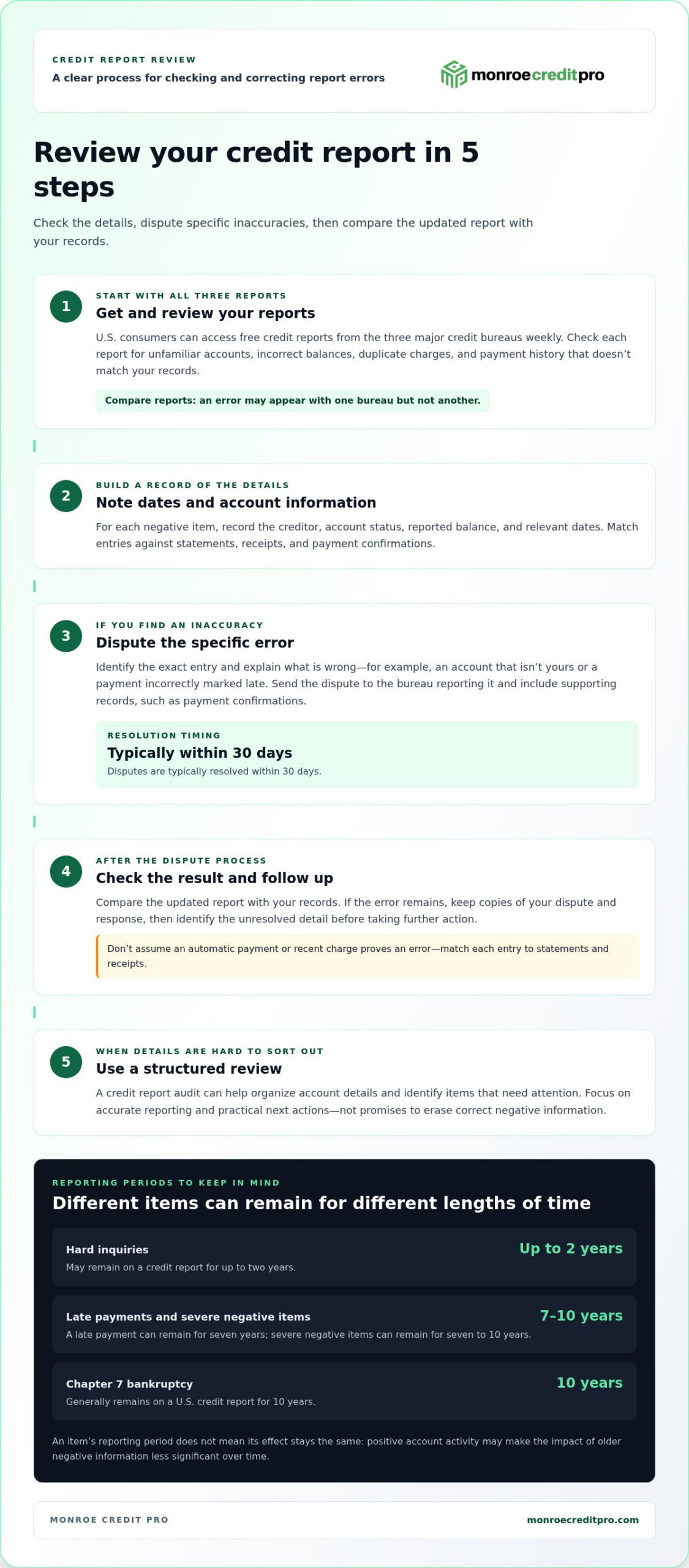
- Get and review your reports. U.S. consumers can access free credit reports from the three major credit bureaus weekly. Review each report for unfamiliar accounts, incorrect balances, duplicate charges, and payment history that doesn’t match your records. Comparing reports can reveal that an error appears with one bureau but not another.
- Note the dates and account details. Record the creditor, account status, reported balance, and relevant dates for each negative item. Severe negative items can remain for seven to 10 years; hard inquiries can remain for up to two years. Chapter 7 bankruptcy has a separate 10-year reporting period.
- Dispute specific errors. If an account isn’t yours or a payment is incorrectly marked late, identify the exact entry and explain what is wrong. Send the dispute to the credit bureau reporting it and include supporting records, such as payment confirmations. Disputes are typically resolved within 30 days.
- Track the result and follow up. Compare the updated report with your records after the dispute process. If an error remains, keep copies of your dispute and response, then identify the unresolved detail before taking further action. Avoid treating automatic payments or recent charges as proof of an error; match each entry to statements and receipts.
- Use a structured review if errors are difficult to sort out. A credit report audit can help organize account details and identify items that need attention. Focus on accurate reporting and practical next actions, not promises to erase correct negative information.
Credit utilization
Credit utilization compares card balances with available credit. Lower utilization can support your score, so these credit score rebuilding tips start with tracking what each card reports. A commonly recommended target is below 30%, though there’s no hard-and-fast rule. Some experts advise using less than 10% of total credit limits.
Review Credit Utilization
Check each card’s balance and credit limit, then divide the balance by the limit to calculate its utilization ratio. Review individual cards and your combined total. Amounts owed account for 30% of a FICO Score, so high balances deserve attention even when your payment history is positive.
Compare the details before opening another account. A new card may increase your available credit, but it can also lead to new charges. Review each account separately: one card near its limit can affect your profile even when your overall utilization is lower.
Pay Down Credit Card Balances
Choose a repayment amount you can sustain, then direct extra payments toward cards with high utilization. Reducing balances over time can support progress. Paying the full statement balance each month can also help keep your balance from approaching the card’s limit.
Find out when your issuer reports account information. Paying before the statement closing date may lower the balance reported to credit bureaus. Keep making at least the minimum payment by its due date. Lower utilization does not replace timely payments.
Limit Credit Utilization
Set a personal spending limit below your card’s maximum and review purchases before they add up. Use only a manageable share of your available credit for routine charges, then pay promptly. This can help control utilization without relying on a new account to increase your total limit.
Review balances regularly and adjust spending if utilization rises. Lower utilization can reflect responsible credit management, but no single threshold guarantees a score outcome. Apply these credit score rebuilding tips consistently: reduce balances, limit new charges, and keep payments current.
Applying for new credit
Apply for new credit only when it meets a clear borrowing need. Multiple applications close together can lead to additional hard inquiries and complicate your progress. Use these credit score rebuilding tips to weigh an application against your current goals before opening another account.
Can secured credit cards help rebuild credit, and what fees should you compare? A secured card can help establish a credit record if the issuer reports payments to credit bureaus. Compare annual, application, and late fees, along with the interest rate and how the refundable deposit is handled.
- Pause before applying. Decide whether a new account supports a planned purchase or credit-building goal. A hard inquiry typically lowers a score by fewer than five points. Several applications in a short period may create additional inquiries and make rebuilding more difficult.
- Review the card terms. Before opening a secured card, check whether the issuer reports account activity to credit bureaus. Understand its deposit, fees, interest, and payment terms. Use the account responsibly so it can contribute positive payment activity rather than adding missed payments or costly balances.
- Organize loan applications. If you’re rate-shopping for a mortgage, auto loan, or student loan, newer FICO Score versions may count multiple inquiries as one when applications fall within a 14-to-45-day timeframe. The window depends on the scoring version, so plan applications accordingly.
- Give inquiries time to age. Hard inquiries can remain on credit reports for up to two years, while they affect a FICO Score for up to one year. Avoid applications that aren’t needed, and keep existing accounts current. These credit score rebuilding tips keep your attention on choices within your control.
- Apply with a purpose. New credit accounts and recent inquiries make up 10% of a FICO Score. Don’t open several cards just to broaden your credit mix. Consider whether the account fits your budget and borrowing plan before submitting an application.
If you want help considering how an application fits your credit profile, get help reviewing your credit profile.
Monroe Credit Pro: Credit Restoration
Monroe Credit Pro offers Credit Restoration to help you address credit report concerns and plan practical next steps. This support can be useful when inaccurate account details, unfamiliar entries, or a complicated report make it difficult to manage rebuilding on your own.
Professional Credit Repair and Credit Correction can support a focused review of report issues. Credit Counseling can help you understand how account choices fit your broader credit goals. These services complement the habits covered above; they do not replace timely payments or careful balance management.
Share the report details and questions you want to address, then work through them in an organized way. Contact Monroe Credit Pro to discuss your next step, or visit monroecreditpro.com.
Make Your Next Credit Decision Deliberate
Progress is easier to sustain when your next action is specific, manageable, and connected to a goal. Choose one account to review, one spending habit to adjust, or one payment routine to strengthen. Keep a simple record of what you changed and what needs attention next. Small, consistent decisions can turn credit score rebuilding tips into a practical routine, rather than a list you read once and set aside.
Keep your focus on the information you can act on and the habits you can maintain. If report concerns or account questions are making it difficult to decide what to do next, Monroe Credit Pro can help you consider a structured path forward. Explore Monroe Credit Pro’s credit support and choose a next step that fits your situation. Rebuilding takes commitment, and every thoughtful action can help you move forward with greater clarity.
Frequently Asked Questions
How Long Does It Take to Improve Your Credit?
Some improvement may appear within 30 to 90 days, while more substantial rebuilding can take a few years. The timing depends partly on when lenders report account updates and which factors are changing. Track your score and report dates together; if a balance changes but the report hasn’t updated, the score may not reflect that action yet.
What Is a Credit Utilization Ratio?
A credit utilization ratio compares the balance on a revolving account with its available credit. Calculate it by dividing the card balance by its limit, then review both individual cards and your combined accounts. For example, one card close to its limit can stand out even if another card has little debt. Check reported balances, not just recent purchases.
What if your balances are too high?
List each card’s balance, limit, and minimum payment, then make a repayment plan that fits your budget. Direct additional payments toward a card with high utilization while keeping required payments current on your other accounts. If you can’t pay the full amount, make at least the minimum payment. Avoid adding new charges faster than you can repay them.
How does payment history affect your credit score?
Payment history is a major scoring factor, although its weighting depends on the model. It accounts for 35% of a FICO Score and 40 percent of a VantageScore 3.0 credit score. Each account’s reported payment record contributes to the picture lenders see. A new on-time payment helps establish positive activity, but it doesn’t erase an earlier missed payment.
How can you check your credit reports and dispute errors for free?
Review reports from Experian, Equifax, and TransUnion, which consumers can access free weekly. Compare account names, balances, payment records, and inquiries across all three. If an entry is inaccurate, identify the specific item and dispute it with the bureau reporting it, including relevant supporting records. Credit bureaus have 30 days to investigate disputes, according to Monroe Credit Pro’s published information.
How long do late payments, collections, and bankruptcies stay on credit reports?
A payment made more than 30 days late can remain for seven years, according to the Federal Trade Commission. Severe negative items, including collections, can remain for seven to 10 years. Chapter 13 bankruptcy generally remains for 7 years, while Chapter 7 generally remains for 10 years, according to the Federal Trade Commission. An item’s reporting period differs from how strongly it affects a score over time.