



What if asking for credit help says less about your character and more about your willingness to take a practical next step? If you’ve wondered, “is it embarrassing to hire a credit repair company,” that concern is understandable. Credit challenges can follow unexpected setbacks or reporting mistakes, but they don’t define your worth or responsibility.
This guide explains what a credit repair company can and can’t do, and how to decide whether professional guidance fits your needs. Only inaccurate, outdated, or unverifiable information may be disputed. Accurate, verified negative information can’t simply be erased, and no company can guarantee a score increase. You’ll also learn about consumer protections and realistic timing: credit bureaus generally have 30 days to investigate disputes, while the full process can take 3-6 months or longer. Whether you handle disputes yourself or choose organized support, you can take your next step with clearer expectations and less shame.
Key Takeaways
- Wondering “is it embarrassing to hire a credit repair company”? Seeking guidance is a practical choice, not a judgment of your character.
- Understand which credit report entries may be disputed and why accurate, verified negative information has limits.
- Choose between handling disputes yourself and professional support based on the time, organization, and guidance you want.
- Review your reports and identify concerns. A three-bureau audit can help you see information across Experian, Equifax, and TransUnion.
Hiring Credit Repair Isn’t Embarrassing, It’s Practical
No. Needing help understanding a credit report says nothing about your character or responsibility. Reports can be confusing, and collections, repossessions, or financial setbacks can leave you unsure what to address first. Asking for guidance is a way to take an active role in understanding your credit file, not an admission of personal failure.
The question “is it embarrassing to hire a credit repair company” can feel especially personal when money concerns are private. But seeking support doesn’t mean giving up control. You can stay involved, ask questions, and decide which steps make sense for your circumstances.
Why asking for financial help can feel uncomfortable
Some people worry that sharing financial details will invite judgment or expose information they’d rather keep private. Those concerns are understandable, but they don’t have to determine your next step. Start by identifying what you want clarified, such as an unfamiliar account or a collection entry you don’t recognize. Specific questions can make an overwhelming report easier to review.
What hiring a credit repair company does, and does not, say about you
Professional support can bring structure to reviewing a credit report, identifying possible inaccuracies, and organizing disputes. It doesn’t mean you’re irresponsible, and it can’t guarantee a particular result. A dispute addresses information that is inaccurate, outdated, or unverifiable, not accurate, verified negative history. The Credit Repair Organizations Act provides federal consumer protections related to credit repair organizations and their practices. Knowing those protections exist can help you approach the process with informed questions rather than shame.
Hiring help is a choice about how you want to manage the review process, not a verdict on your past. Asking for informed support is a practical choice, not a personal failure.
What a credit repair company can do, and where its limits matter
Credit repair involves reviewing credit reports, identifying information that may be inaccurate, outdated, or unverifiable, and disputing those entries. A company can help organize the review, prepare dispute letters, communicate with credit bureaus, and track progress. It cannot make accurate, verified negative information disappear simply because it affects your credit. For consumers dealing with legitimate, overwhelming balances, structured relief programs like debtprosa.co.za offer debt review and consolidation options to manage over-indebtedness.
Credit repair is legal, and Monroe Credit Pro works within applicable consumer-protection laws. A legitimate service can support a dispute process, but it cannot promise a score outcome.
What happens after a credit-report dispute is submitted?
After a dispute is received, credit bureaus generally have 30 days to investigate. Reports typically update every 30-45 days, but an update does not guarantee that disputed information will change. Timing and results depend on the information reviewed and the investigation. Some clients may see results within 30-60 days, while the full process can take 3-6 months or longer.
How to recognize promises that should raise concern
Be cautious of claims that a company can guarantee a score increase or remove accurate, verified negative entries. Instead, expect a clear explanation of which information is being disputed, why it may be inaccurate, and how progress will be tracked. That transparency helps you understand the work being done without mistaking dispute support for a promised result.
Monroe Credit Pro offers a free initial credit consultation to discuss your concerns and options. Learn more about credit repair support and the dispute process.
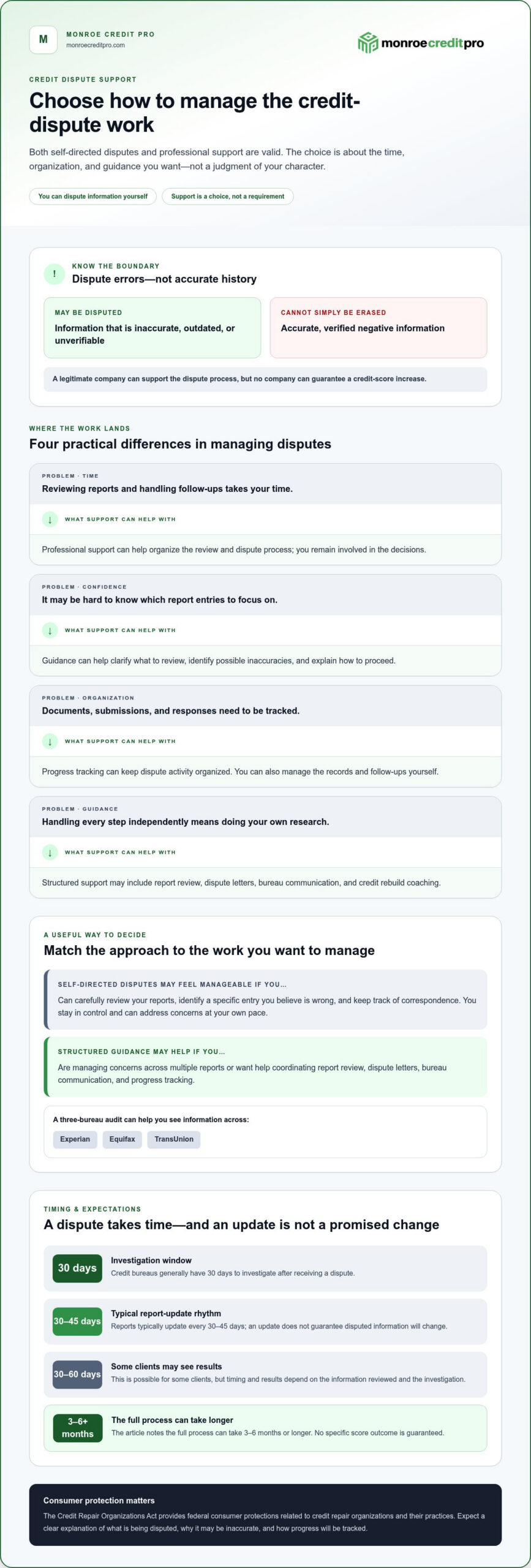
Should you handle credit disputes yourself or get professional support?
Either option can be appropriate. Consumers have the right to dispute information themselves at any time, so hiring support is a choice about how you want to manage the work, not a test of responsibility. Consider how comfortable you are reviewing reports, organizing documents, and following up with credit bureaus.
| Consideration | Self-directed disputes | Professional support |
|---|---|---|
| Time | You set aside time to review reports and manage follow-ups. | Support can help organize the review and dispute process. |
| Confidence | You’re comfortable identifying concerns and communicating them. | Guidance can help clarify what to focus on and how to proceed. |
| Organization | You track documents, submissions, and responses yourself. | Progress tracking can keep dispute activity organized. |
| Guidance | You research and manage each step independently. | You can receive structured review and coaching. |
When a self-directed dispute may feel manageable
If you can review your reports carefully, identify a specific entry you believe is wrong, and keep track of your correspondence, handling a dispute yourself may suit you. You stay in control and can address concerns at your own pace. You do not need to hire a company to exercise your right to dispute information.
When structured guidance may reduce the workload
Support may be useful if you’re managing concerns across multiple reports or want help coordinating report review, dispute letters, bureau communication, and progress tracking. Monroe Credit Pro provides a three-bureau credit report audit and credit rebuild coaching as part of its structured support, without promising a score increase. Learn more about comprehensive credit restoration services.
Structured support can help when you want organization or guidance; self-directed disputes may fit when you’re comfortable managing the steps. See the available credit repair support options.
How to take a confident next step with credit repair support
Start with information, not assumptions. Review your credit reports, note entries you don’t recognize or believe may be inaccurate, outdated, or unverifiable, and decide what kind of help would make the process easier. A three-bureau audit reviews your reports from Experian, Equifax, and TransUnion, giving you a fuller view of the information in each file.
Results vary. Some clients may see results within 30-60 days, while the full process can take 3-6 months or longer. These are timeframes, not promises of a particular change to your reports or score.
Questions to bring to an initial credit consultation
Bring a short list of questions so you can understand the process and decide whether it suits your needs:
- Which report items may be inaccurate, outdated, or unverifiable, and what makes them worth reviewing?
- How are dispute letters prepared, bureau communication managed, and progress tracked?
- What support is included, and which outcomes cannot be promised?
Clear answers can help you assess support based on its process, not bold claims. If you’re asking, “Is it embarrassing to hire a credit repair company?” remember that structured guidance is one way to take charge of a practical task.
Build a plan without turning credit challenges into personal shame
Credit report disputes and credit rebuild coaching can help organize your next steps; neither defines your worth. Use your report review to identify what needs attention, then choose whether to handle the work yourself or get support. A three-bureau credit report review can help you understand what appears across your reports.
When you’re ready to discuss your concerns and options, schedule a free initial credit consultation. A calm, informed conversation can help you choose a path forward without shame or unrealistic expectations.
Choose a Next Step That Feels Right for You
Your next move doesn’t need to solve everything at once. Start by deciding what would help you feel more informed: a clearer plan, help keeping track of tasks, or a conversation about unresolved questions. Then choose the level of involvement that fits your comfort and priorities. You remain part of the process and can move forward at a manageable pace.
If you’re still asking, “is it embarrassing to hire a credit repair company,” remember that getting guidance is a decision about the support you want, not a judgment of who you are. Monroe Credit Pro’s client portal provides access to dispute progress, and a personalized action plan can help organize your next steps.
When you’re ready, schedule a free initial credit consultation to discuss your concerns and the support you’re looking for. You deserve to approach your financial goals with clarity and confidence, not shame.
Frequently Asked Questions
Is it embarrassing to hire a credit repair company?
No. Asking “is it embarrassing to hire a credit repair company” is understandable, but credit challenges don’t define your character. Professional help is one way to get organized and understand what may need attention. For example, if a report contains an account you don’t recognize, support can help you examine the entry and consider what information is relevant. Choose help for clarity and process, not a promised score change.
Is credit repair legal in the United States?
Yes. Credit repair is legal in the United States, and consumers may dispute information themselves or seek professional support. A dispute should focus on information that is inaccurate, outdated, or unverifiable. For example, if a collection account appears twice, note both entries and gather relevant records to explain your concern. Credit bureaus generally have 30 days to investigate disputes, but no company can promise a particular result.
Can I dispute credit report errors without hiring a company?
Yes. You can submit disputes yourself at any time, without hiring a credit repair company. To make your concern specific, identify the account and the field that appears wrong, such as a payment marked late when your records show it was paid on time. Keep copies of your report and related documents together so you can refer to the same information as the dispute progresses.
How long does it take for credit repair to show results?
Some clients may see results within 30-60 days, but timing depends on the items challenged and the review process. The full process can take 3-6 months or longer. Bureaus generally have 30 days to investigate a dispute and typically update reports every 30-45 days. These timeframes describe investigation and reporting cycles, not a guaranteed correction or credit-score increase.
What should I ask before hiring a credit repair company?
Ask how the company decides which entries merit review, what information you may need to provide, and how you’ll learn what happens next. Request a clear explanation of the service’s scope and how progress updates will be shared. For example, understand whether the company is addressing a specific account or reviewing multiple reports. Avoid relying on promises of a specific score increase or the removal of accurate information.